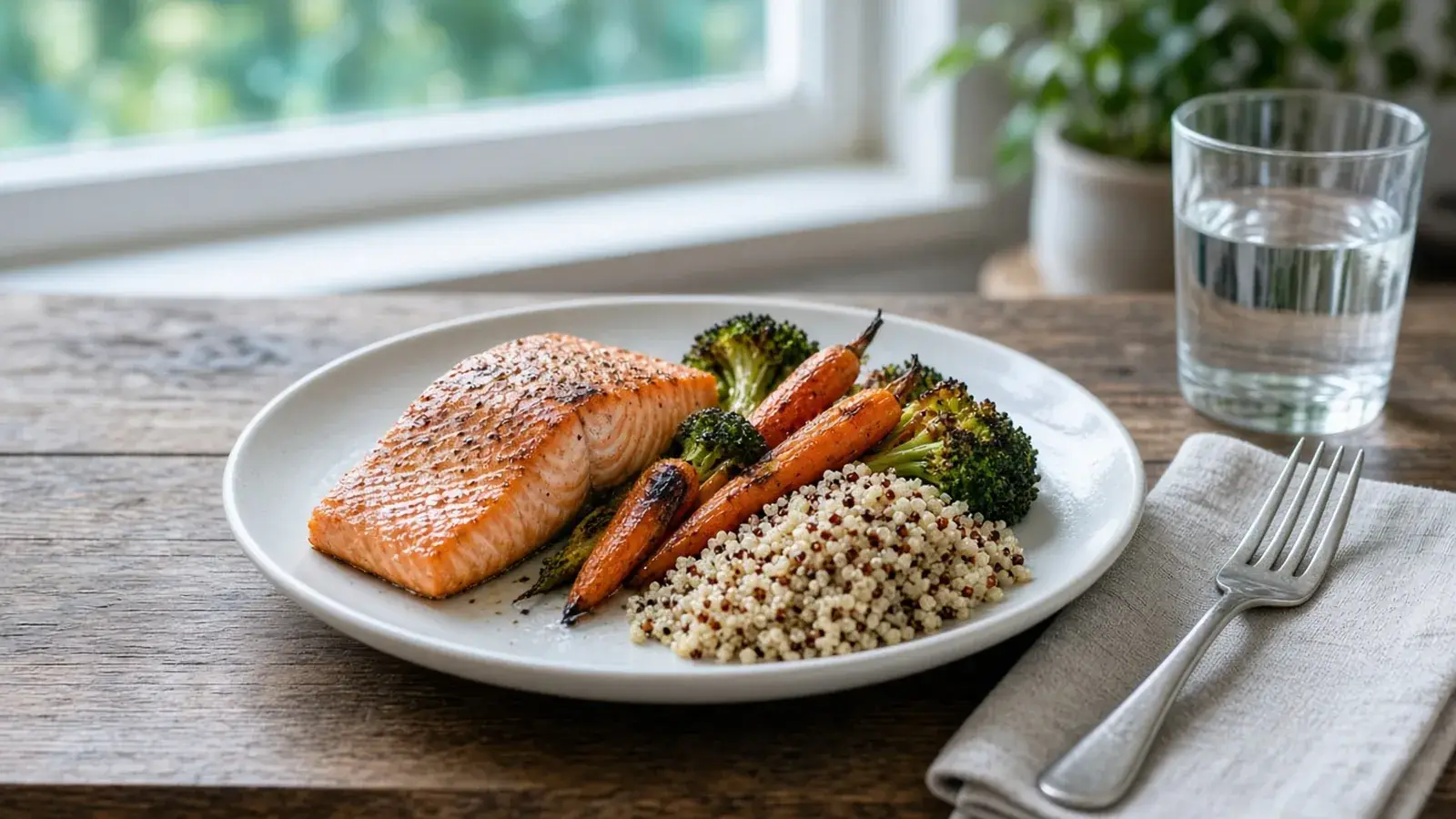
Part of: GLP-1 Side Effects · Common side effects
Constipation and Diarrhea on GLP-1s
Why semaglutide and tirzepatide can cause constipation or diarrhea, how often it happened in trials, how long it tends to last, practical food, fluid and bathroom-habit strategies, and the warning signs that need a clinician fast.

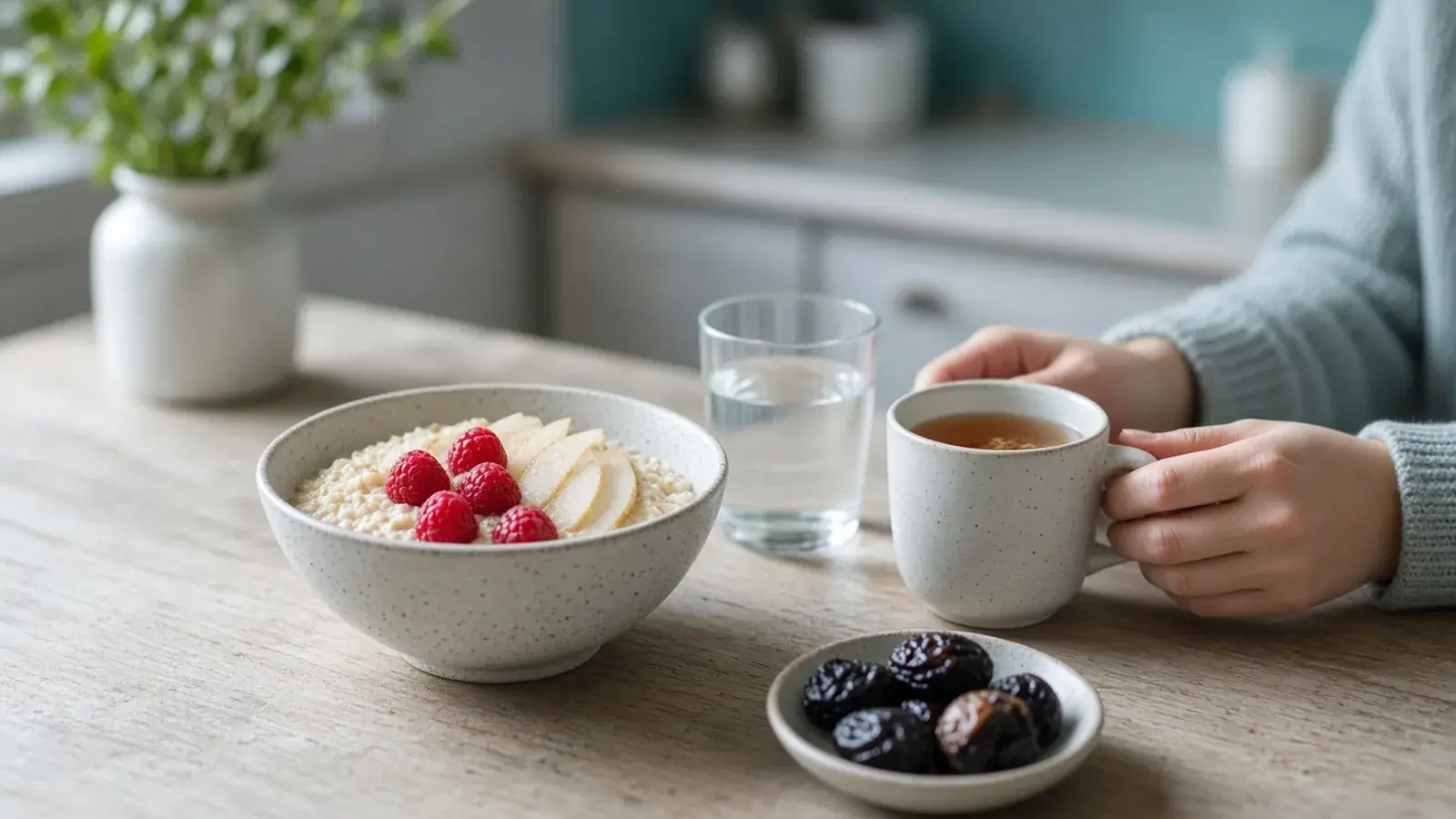
Nausea gets most of the attention, but ask people a few weeks into GLP-1 treatment what bothers them day to day and many will talk about the bathroom instead. Some go days without a bowel movement. Others suddenly need to know where every restroom is. A few swing between the two.
Both constipation and diarrhea are common, usually mild to moderate, and usually manageable. This guide explains why they happen, how often they showed up in the big trials, how long they tend to last, what usually helps, and which symptoms mean you should call a clinician the same day. It draws on the FDA-approved labels for semaglutide (Wegovy) and tirzepatide (Zepbound), two 2025 medical reviews, Cleveland Clinic and NIH guidance, and a Stanford Health Care dietitian webinar.
Educational only. Do not start, stop or change a GLP-1 dose, or begin laxatives or anti-diarrhea medicines, without guidance from your prescriber or pharmacist. This article is not personal medical advice.
The short answer
- Diarrhea is slightly more common in most trials. It tends to appear in the first weeks and around dose increases, then fade.
- Constipation is a little less common in the labels but tends to last longer, often for weeks.
- The basics that help most people are the same for both: steady fluids, small regular meals, gentle movement, and patience while your body adjusts, plus food changes that differ by symptom.
- Your clinician can help with short-term medicines and, if needed, a slower dose schedule.
- A few symptoms, such as severe belly pain, vomiting, no gas or stool, blood in the stool or dehydration, need prompt medical care.
Why GLP-1 medications change your bowel habits
GLP-1 medications, including semaglutide and tirzepatide (which acts on both GLP-1 and GIP receptors), copy gut hormones that help control appetite and digestion. Two effects matter most for your bowels:
- They slow digestion. The labels and reviews describe delayed stomach emptying, and the Mayo Clinic Proceedings review notes that these drugs affect movement in both the stomach and the intestines. When food and stool move more slowly, the colon has more time to pull water out, which can leave stool harder and drier.
- You eat and drink less. Less food means less stool. Cleveland Clinic endocrinologist Keren Zhou, MD, also points out that when people feel less driven to eat, they often lose some of their drive to drink water too. Low fluid intake is a classic cause of constipation.
Diarrhea is less intuitive, since the drugs slow things down. Researchers do not fully understand it, but the reviews describe it as part of the same shift in gut motility and digestion, often triggered or worsened by large, fatty or sugary meals while the gut adjusts. Both problems tend to be dose-related: they are more likely right after starting and after each dose step.
It is also worth knowing that other things can cause the same symptoms. The 2025 review by Witaszek and colleagues reminds clinicians to rule out other causes, such as infections, reflux, or side effects from other medicines like metformin, before blaming the GLP-1. NIDDK lists iron supplements, some antacids, certain blood pressure medicines, opioid pain relievers and some antidepressants among the medicines that can worsen constipation.
How common are they? What the labels and trials show
The most reliable numbers come from the FDA-approved prescribing information, which pools the large placebo-controlled trials.
| Medication (label) | Diarrhea | Constipation | Placebo (diarrhea / constipation) |
|---|---|---|---|
| Semaglutide 2.4 mg injection (Wegovy) | 30% | 24% | 16% / 11% |
| Tirzepatide 5 mg (Zepbound) | 19% | 17% | 8% / 5% |
| Tirzepatide 10 mg (Zepbound) | 21% | 14% | 8% / 5% |
| Tirzepatide 15 mg (Zepbound) | 23% | 11% | 8% / 5% |
Sources: Wegovy prescribing information, Table 3 (adults with obesity or overweight); Zepbound prescribing information, Table 1 (Studies 1 and 2). The Zepbound counts include “frequent bowel movements” with diarrhea and “hard feces” with constipation.
How to read these numbers
- Placebo is not zero. Some people get constipation or diarrhea anyway, because of diet changes, other medicines or ordinary illness. The real “drug effect” is the gap between the two columns.
- Individual trials vary widely. The 2025 review lists diarrhea rates of roughly 18% to 36% across incretin obesity trials, and constipation as high as 39% with semaglutide 2.4 mg in STEP 8. In the head-to-head SURMOUNT-5 trial, rates were similar for the two drugs: about 23% to 24% for diarrhea and 27% to 29% for constipation.
- Most cases are mild to moderate. In the Wegovy injection trials, 4.3% of adults stopped treatment permanently because of a GI side effect of any kind, compared with 0.7% on placebo. For Zepbound, GI-related discontinuation ranged from 1.9% to 4.3% depending on dose, versus 0.5% on placebo.
In other words, a bowel change is common enough that it should not alarm you, but it is not so universal that you should expect it. Many people have little trouble at all.
When it starts and how long it lasts
Diarrhea usually comes early. The 2025 review notes that diarrhea is most common in the first four weeks of treatment and decreases significantly over time. The Zepbound label says most nausea, vomiting and diarrhea occurred during dose escalation and decreased over time. Cleveland Clinic’s Dr. Zhou says people often have their most significant side effects in the first three to four weeks, when slowed stomach emptying is at its strongest.
Constipation tends to linger. The same review reports that in the STEP 1 to 3 semaglutide trials, constipation lasted an average of 47 days, and the share of people affected leveled off around the 10th week. That is longer than nausea or diarrhea typically last. The practical lesson: if constipation shows up, start good habits early instead of hoping it disappears in a few days.
Because symptoms cluster around dose changes, it helps to watch the week or two after each increase more closely and to tell your prescriber how you are doing before the next step. Our guide to dose escalation and the GLP-1 basics explains why doses are raised slowly.
First, is it really constipation?
This sounds obvious, but it trips up many people. In a Stanford Health Care webinar on GLP-1 side effects, senior dietitian Elaine Han made the point that eating much less usually means pooping less. If you used to go every day and now go every other day, that can simply reflect smaller meals.
NIDDK describes constipation as any of the following:
- fewer than three bowel movements a week
- stools that are hard, dry or lumpy
- stools that are difficult or painful to pass
- a feeling that not all stool has passed
If your stools are soft and easy to pass, a slower rhythm is probably fine. If they are hard, painful or you feel blocked, act on it.
What helps with constipation
These steps come from NIDDK, Cleveland Clinic, the 2025 reviews and the Stanford webinar. Most people need a combination, not just one.
1. Drink steadily through the day
Fluids help fiber work and keep stool soft. Since GLP-1s can blunt thirst along with appetite, it helps to sip on a schedule, for example a glass of water with each small meal and one between meals, or phone reminders. If drinking at meals makes you too full to eat, Cleveland Clinic suggests sipping between meals instead. A common practical check, mentioned in the Stanford webinar, is urine color: pale yellow usually means you are drinking enough. Ask your clinician about a fluid target if you have heart or kidney disease.
2. Add fiber slowly, and do not cut it too far
NIDDK recommends 22 to 34 grams of fiber a day for adults, depending on age and sex, added a little at a time so your body can adjust. Good food sources include:
- oatmeal and other whole grains
- beans, lentils and chickpeas
- berries, pears, oranges and apples with the skin on
- vegetables such as carrots, broccoli and peas
- nuts and seeds, including ground flaxseed sprinkled on yogurt
When you eat much less, it is easy to fall short, so try to include a little fiber at every meal or snack. Two cautions apply on a GLP-1. First, Cleveland Clinic advises taking it easy on high-fiber foods right after your dose if you already feel bloated or full, because a big fiber jump on a slow stomach can make you feel worse. Second, the 2025 review warns against cutting fiber too much for long periods, which can make constipation worse over time. Slow and steady wins. For more on balancing the two, see fiber and hydration in our nutrition hub and what to eat on a GLP-1.
3. Keep protein, but watch very heavy, fatty meals
Protein matters on a GLP-1 to help protect muscle; see how much protein you need on a GLP-1. You do not need to give it up for constipation. The 2025 review does suggest temporarily easing back on very high-protein or high-fat foods if constipation is getting worse, and pairing protein with fiber-rich foods such as beans, vegetables or fruit.
4. Move every day
Physical activity helps the gut move. Cleveland Clinic notes that even a few minutes of walking can help. The Stanford webinar suggests daily movement, with some people finding morning activity especially helpful, plus gentle twisting yoga poses. Regular activity also supports muscle and long-term weight maintenance; see strength training on GLP-1s and the exercise and metabolism hub.

5. Build simple bathroom habits
These sound minor but help many people:
- Use a footstool. Resting your feet on a low stool so your knees are above your hips puts the body in an easier position to pass stool, according to Cleveland Clinic and the Stanford webinar.
- Try a regular “sit time.” The Stanford dietitian suggests sitting on the toilet at the same time each day, about 30 minutes after eating, even without an urge, for no longer than 20 minutes, while breathing slowly and relaxing. Eating naturally nudges the colon to move.
- Do not ignore the urge. NIDDK lists ignoring the urge to go among the routine changes that can cause constipation.
- Try a warm drink. Some people find warm water or herbal tea in the morning helps get things moving.
- Gentle abdominal massage. The webinar describes a simple self-massage that traces the path of the large intestine (often called the “I love you” massage) as something some people find helpful. It is low risk, but stop if it causes pain.
6. Ask about over-the-counter options early, not late
If food, fluid and movement are not enough after several days, talk to your clinician or pharmacist rather than waiting weeks. The 2025 review describes osmotic laxatives (such as polyethylene glycol, also called macrogol, or lactulose) as the preferred first-line medicines, with stimulant laxatives used short term if those do not work. Cleveland Clinic mentions stool softeners as another option your provider may suggest. The review is clear that no randomized trials have tested these specifically in people on obesity medicines, though they are well established for ordinary constipation. Which one is right, and how much, depends on your health and other medicines, so get personal advice.
What helps with diarrhea
1. Replace fluids and electrolytes
Diarrhea can dehydrate you, and dehydration matters more on a GLP-1. Both the Wegovy and Zepbound labels warn about acute kidney injury due to volume depletion, noting that most reported cases happened in people who became dehydrated from nausea, vomiting or diarrhea. Sip water regularly and include sources of electrolytes. Cleveland Clinic recommends hydrating with electrolytes. Note that the Mayo Clinic Proceedings review and the 2025 review both advise avoiding sugary sports drinks during diarrhea; the Stanford dietitian suggested choosing a lower-sugar electrolyte drink instead. Broth and soup can also help replace salt.
2. Eat small, gentle meals
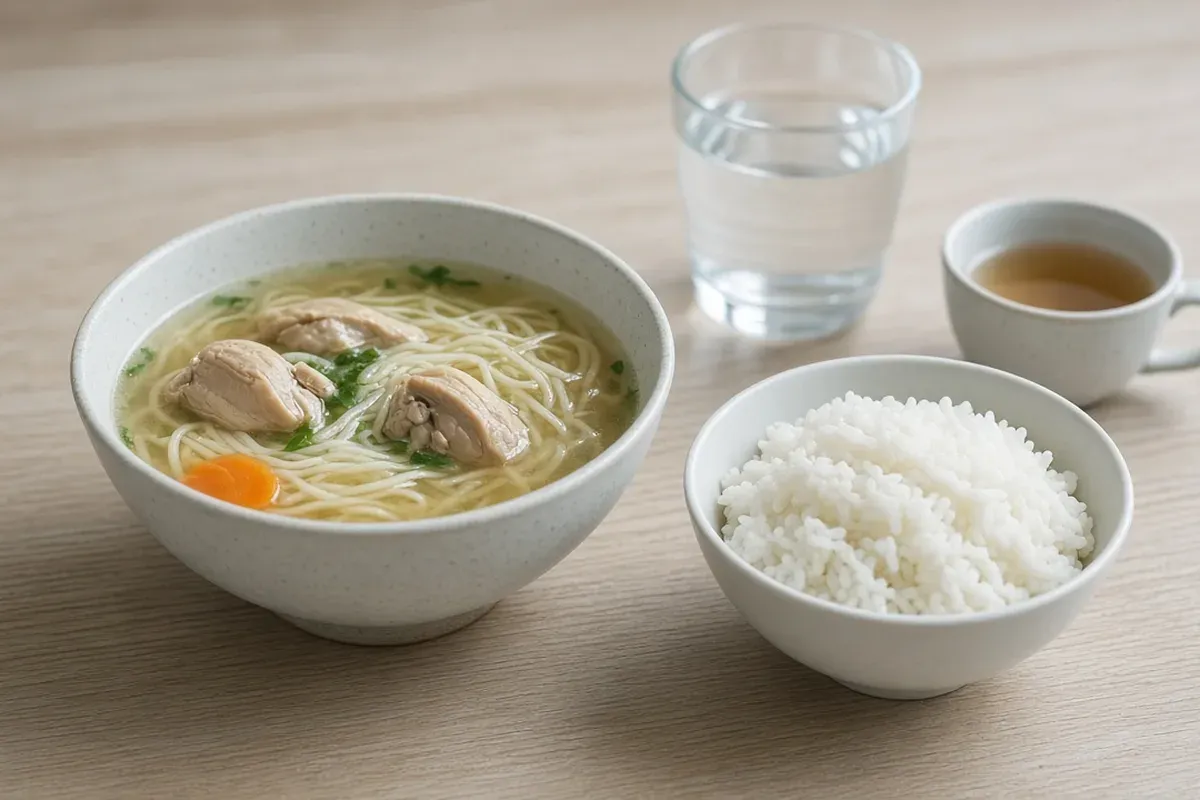
Cleveland Clinic suggests soft, bland, lower-fiber foods while diarrhea lasts. Examples from the Stanford webinar include chicken broth, plain chicken breast, white fish, eggs, soft tofu, cottage cheese and smooth yogurt (if dairy agrees with you), eaten in small portions every three to four hours. A temporary reduction in fiber may help, according to the 2025 review, then build back up once stools firm.
3. Limit the usual triggers
NIDDK, the Mayo Clinic Proceedings review and the 2025 review list similar foods and drinks that can make diarrhea worse:
- alcohol
- caffeine, including coffee and some sodas
- greasy, fried or very high-fat foods, such as pizza and fast food
- very sugary drinks and juices
- milk products if lactose bothers you
- sugar alcohols such as sorbitol, mannitol, xylitol and maltitol, which are common in sugar-free gum, candy and some diet products
- for some people, spicy foods, carbonated drinks and very hot or very cold foods
Keeping a short food and symptom note for a week, as NIDDK suggests, can help you spot your personal triggers.
4. Ask before using anti-diarrhea medicine
The 2025 review says short-term loperamide may be considered if food and fluid changes are not enough, although direct evidence in people on incretin medicines is limited. Cleveland Clinic mentions loperamide and bismuth subsalicylate as short-term over-the-counter options a provider may suggest. Check with your clinician or pharmacist first, especially if you have a fever or blood in the stool, which can signal an infection that needs a different approach.
5. Remember your other pills
Diarrhea and vomiting can affect how well other medicines work. Separately, the Zepbound label notes that tirzepatide’s effect on stomach emptying may reduce the effectiveness of oral birth control pills, and it advises switching to a non-oral method or adding a barrier method for 4 weeks after starting and for 4 weeks after each dose increase. If you take medicines where small changes matter, such as warfarin or birth control, ask your pharmacist how GI symptoms and your GLP-1 might affect them.
Dosing: the lever only your prescriber should pull
Food and habits help a lot, but the biggest lever is often the dose schedule. Both medications start low and step up gradually because GI side effects are dose-related. Medical reviews describe several options clinicians use when side effects are hard to manage:
- Staying on the current dose longer before the next increase. The Mayo Clinic Proceedings review describes holding the current dose for an extra 2 to 4 weeks when nausea and vomiting persist.
- Temporarily stepping back to a lower dose, then re-escalating more slowly.
- Staying on the highest dose you tolerate well instead of pushing higher.
- Switching medications if side effects remain intolerable, as Cleveland Clinic notes.
These decisions depend on your goals, other conditions and how you respond, so they belong with the prescriber. Do not skip doses or change the amount on your own. If you get your prescription through an online program, make sure you can reach the prescribing clinician easily about side effects; our guide to how telehealth weight-loss programs work covers what to ask.
Warning signs: when to call a clinician the same day
Most bowel changes on a GLP-1 are uncomfortable rather than dangerous. But both the Wegovy and Zepbound labels list ileus, intestinal obstruction and severe constipation including fecal impaction among reports collected after approval, and both warn about kidney injury from dehydration. Based on the labels and NIDDK guidance, seek prompt medical care if you have:
- severe or constant abdominal pain, with or without vomiting (also a possible sign of pancreatitis or gallbladder problems)
- repeated vomiting or being unable to keep fluids down
- no stool and no gas, especially with a swollen or hard belly
- blood in the stool, rectal bleeding or black, tarry stools
- fever along with diarrhea or constipation
- diarrhea lasting more than 2 days, or six or more loose stools a day
- signs of dehydration: strong thirst, dry mouth, dizziness or light-headedness, very dark urine or urinating much less than usual
- constipation that does not improve with self-care, or new bowel changes if you have a family history of colon or rectal cancer
NIDDK also lists losing weight without trying as a warning sign with constipation; on a weight-loss medicine that is harder to judge, so tell your clinician about any weight loss that seems faster than expected alongside bowel symptoms. For a broader list, see the side effects hub and our managing side effects guide.
A practical plan for the first month
- Before your first dose or a dose increase, stock easy foods: oatmeal, fruit, beans, yogurt, eggs, broth, soup and low-sugar electrolyte drinks.
- Eat lighter for a day or so around a new dose, as Cleveland Clinic suggests, avoiding a big, greasy “last hurrah” meal.
- Set fluid reminders if you are not thirsty.
- Walk daily, even for 10 minutes after meals.
- Track bowel movements and stool consistency for a few weeks, along with your dose dates. A simple note on your phone works.
- If constipation starts, add fiber and fluids steadily, use the footstool and sit-time habits, and call your pharmacist or clinician after several days without relief.
- If diarrhea starts, switch to small gentle meals, push fluids and electrolytes, cut back on caffeine, alcohol, fatty food and sugar alcohols, and call if it lasts more than 2 days or you see warning signs.
- Share your notes with your prescriber before the next dose increase.
Our first 30 days guide covers the wider onboarding picture, and the nausea guide explains the most common early side effect.
Questions to ask your clinician
- Which of my current medicines or supplements could add to constipation or diarrhea?
- If I get constipated, which over-the-counter option do you recommend for me, and at what point should I call?
- What should I do if I have diarrhea for more than a day or two?
- Should we hold my dose longer before the next increase if symptoms are bothering me?
- How much fluid should I aim for, given my heart, kidney or blood pressure history?
- Does my GLP-1 affect any of my other pills, including birth control?
Myths and facts
Myth: “If I’m not going daily, I’m constipated.” Not necessarily. Eating less means less stool. Constipation is about hard, painful or infrequent stools (fewer than three a week), not a missed day.
Myth: “Diarrhea means the drug is working better.” There is no good evidence for that. Side effects are not a sign of more fat loss, and dehydration from diarrhea carries real risks.
Myth: “I should stop fiber completely to avoid GI trouble.” Short breaks from very high-fiber foods can help during diarrhea or right after a dose increase, but cutting fiber long term can worsen constipation, according to the 2025 review.
Myth: “Side effects mean I should quit.” Most GI side effects are mild to moderate and ease over time. Cleveland Clinic’s Dr. Zhou notes that most people can get to a comfortable place with diet, hydration and dose adjustments, although a small group cannot tolerate a given medication. That decision belongs with your prescriber.
How this fits our side-effect guides
This article sits in the common side effects section of the GLP-1 side effects hub, alongside GLP-1 nausea. For background on the medicines themselves, see what a GLP-1 medication is, how GLP-1s work for weight loss, what semaglutide is and what tirzepatide is. If you take the tablet form, oral semaglutide explained covers its morning routine.
The bottom line
Constipation and diarrhea are among the most common side effects of GLP-1 medications. Diarrhea tends to come early and around dose increases, then settle. Constipation is a bit less common but often lasts weeks. Steady fluids, gradual fiber, small regular meals, daily movement and simple bathroom habits help most people. Pharmacists and clinicians can add short-term medicines or slow the dose schedule when needed. Watch for the red flags, especially severe pain, vomiting, no gas or stool, blood, or dehydration, and get care quickly if they appear.
Keep learning in the side effects hub, the Eating on GLP-1s hub and the GLP-1 Guide.
Medical disclaimer: Weightomics publishes general health information for education only. It is not a substitute for professional medical advice, diagnosis or treatment. Never start, stop or change a medication or diet plan without talking to a licensed clinician.
Frequently asked questions
How common is constipation on semaglutide or tirzepatide?
In the Wegovy prescribing information, 24% of adults on semaglutide 2.4 mg reported constipation versus 11% on placebo. In the Zepbound prescribing information, constipation was reported by 17%, 14% and 11% of people on tirzepatide 5, 10 and 15 mg versus 5% on placebo. Individual trials vary; a 2025 review lists rates up to 39% for semaglutide 2.4 mg in the STEP 8 trial.
How common is diarrhea on GLP-1 medications?
Diarrhea was reported by 30% of adults on Wegovy injection versus 16% on placebo, and by 19% to 23% of people on Zepbound (depending on dose) versus 8% on placebo. A 2025 review of obesity-drug trials puts the general range at about 18% to 36%.
How long does GLP-1 constipation last?
It varies. A 2025 review notes that in the STEP 1 to 3 semaglutide trials, constipation lasted an average of 47 days and its prevalence leveled off around week 10, which is longer than nausea or diarrhea usually last. If it is not improving with self-care, talk to your clinician rather than waiting it out.
Is it normal to poop less on a GLP-1?
Often, yes. When you eat much less, you have less stool. Going less often than before is not automatically constipation. NIDDK describes constipation as fewer than three bowel movements a week, or stools that are hard, dry, lumpy, painful or difficult to pass, or a feeling that not everything has passed.
What should I eat if I have diarrhea on a GLP-1?
Medical sources suggest small, gentle, lower-fat meals and plenty of fluids with electrolytes. NIDDK and a Mayo Clinic Proceedings review list common things to avoid during diarrhea: alcohol, caffeine, greasy or fried food, very sugary drinks and juices, milk products if lactose bothers you, and sugar alcohols such as sorbitol, mannitol and xylitol found in sugar-free gum and candy.
Can I take a laxative or anti-diarrhea medicine with a GLP-1?
Ask your clinician or pharmacist first. Reviews of GLP-1 side-effect management describe osmotic laxatives such as polyethylene glycol as a common first choice for constipation and short-term loperamide as an option for diarrhea when food and fluid changes are not enough, but the right choice depends on your health, other medicines and symptoms.
When is constipation or diarrhea on a GLP-1 an emergency?
Seek prompt care for severe or constant abdominal pain, repeated vomiting, inability to pass gas or stool, a swollen hard belly, blood in the stool or black stools, fever, or signs of dehydration such as dizziness, very dark urine or urinating much less. Both the Wegovy and Zepbound labels list intestinal blockage and severe constipation with fecal impaction among postmarketing reports, and both warn about kidney injury linked to dehydration.
Will the side effects get better if I keep taking the medication?
For many people, yes. The Zepbound label says most nausea, vomiting and diarrhea occurred during dose escalation and decreased over time, and Cleveland Clinic notes that GI side effects are usually worst in the first three to four weeks. Do not stop or change your dose on your own; talk to the prescriber, who may slow the dose schedule or adjust treatment.
Sources
- FDA-approved prescribing information: WEGOVY (semaglutide) injection and tablets (revised 06/2026)
- FDA-approved prescribing information: ZEPBOUND (tirzepatide) injection (revised 08/2026)
- Witaszek T et al. Gastrointestinal Symptoms in Obesity Therapy: Mechanisms, Epidemiology, and Management Strategies (2025 review, PMC)
- Saha B, Kamalumpundi V, Codipilly DC. GLP1 and GIP Receptor Agonists: Effects on the Gastrointestinal Tract and Management Strategies for Primary Care Physicians. Mayo Clin Proc 2025
- Cleveland Clinic Health Essentials: How To Manage the Digestive Side Effects of GLP-1 Medications (Sept 9, 2026)
- NIDDK (NIH): Symptoms & Causes of Constipation
- NIDDK (NIH): Eating, Diet, & Nutrition for Constipation
- NIDDK (NIH): Symptoms & Causes of Diarrhea
- NIDDK (NIH): Eating, Diet, & Nutrition for Diarrhea
- Stanford Health Care webinar (YouTube): Managing the Gastrointestinal Side Effects of GLP-1s: Focus on Nutrition & Lifestyle Interventions
Keep reading in Side Effects
- GLP-1 Nausea: Why It Happens and How to Manage ItWhy GLP-1 medications cause nausea, how often it happens in trials, food and dosing strategies clinicians use, when to call a doctor, and what the research says.
See the full Side Effects hub →
Know someone who would enjoy this?