Part of: GLP-1 Side Effects · Serious risks & warnings
GLP-1s and Gallbladder Problems: Gallstones, Risks and Warning Signs
Do GLP-1 medications like semaglutide and tirzepatide cause gallstones? A plain-English, evidence-based guide to how often gallbladder problems happened in trials, why they happen, who is at higher risk, the symptoms to watch for, and practical ways to lower your risk.


Gallbladder problems are one of the side effects people ask about most once they start reading about GLP-1 medications such as semaglutide (Wegovy, Ozempic) and tirzepatide (Zepbound, Mounjaro). Stories of people who lost a lot of weight and then needed their gallbladder removed spread quickly online, and the prescribing information for Wegovy, Zepbound and Saxenda each carries a warning about “acute gallbladder disease.”
This guide explains what that warning means in plain numbers, why these medicines can affect the gallbladder, who may be at higher risk, which symptoms deserve a call to your clinician (and which need urgent care), and what the evidence says about lowering your risk.
Educational only. This is not medical advice. If you take a GLP-1 medication and have new or severe belly pain, contact the clinician who prescribes it. Seek urgent care for severe pain, fever with belly pain, or yellowing of your skin or eyes. Do not stop or change your medicine without talking to your prescriber.
The short answer
GLP-1 medications are linked to a higher risk of gallbladder problems, mainly gallstones and gallbladder inflammation, but the absolute risk is small. In the Wegovy injection weight-loss trials, gallstones (doctors call them cholelithiasis) were reported in 1.6% of adults on the drug versus 0.7% on placebo. In the Zepbound weight-loss trials, gallbladder inflammation (cholecystitis) was reported in 0.7% versus 0.2%. A 2022 analysis of 76 randomized trials estimated that GLP-1 treatment adds about 27 cases of gallbladder or bile duct disease per 10,000 people treated per year, with higher risk at weight-loss doses and with longer treatment.
Two things appear to drive the risk: fast weight loss, which makes bile more likely to form stones, and slower gallbladder emptying. Most people who take these medicines never have a gallbladder problem, but it helps to know the warning signs.
What the gallbladder does, and how gallstones form
The gallbladder is a small, pear-shaped organ tucked under the liver on the right side of your upper belly. The liver makes bile, a digestive fluid made mostly of cholesterol, bile salts and bilirubin, and the gallbladder stores it. When you eat, especially a meal with some fat, your gallbladder squeezes and sends bile into the small intestine to help digest it.
Gallstones are hard, pebble-like pieces that form in the gallbladder, usually from cholesterol. According to NIDDK, part of the National Institutes of Health, they form when bile contains too much cholesterol, too much bilirubin or not enough bile salts, or when the gallbladder does not empty completely or often enough.
Two facts are worth keeping in mind before looking at GLP-1 data:
- Gallstones are common anyway. NIDDK estimates they affect 10% to 15% of people in the US, almost 25 million people.
- Most gallstones cause no symptoms. These “silent” gallstones usually do not need treatment. Problems start when a stone blocks a bile duct, which can cause a painful gallbladder attack (biliary colic), inflammation of the gallbladder, infection, or gallstone pancreatitis.
Obesity itself raises the risk. NIDDK says people with obesity may have more cholesterol in their bile and larger gallbladders that do not work well, and that losing weight very quickly can raise the risk further. So people who are prescribed GLP-1s for weight loss often start with a higher baseline risk than the general population.
What the prescribing information says
The prescribing information for Wegovy, Zepbound and Saxenda each lists acute gallbladder disease under warnings and precautions. Here is what those labels report from their weight-loss trials.
| Medicine (label) | Gallstones (drug vs placebo) | Gallbladder inflammation (drug vs placebo) | Other details in the label |
|---|---|---|---|
| Semaglutide injection (Wegovy) | 1.6% vs 0.7% | 0.6% vs 0.2% | Higher rates in adolescents aged 12+ (gallstones 3.8% vs 0%) |
| Semaglutide tablet (Wegovy pill) | 2.5% vs 1% | Not reported separately | Same warning as the injection |
| Tirzepatide (Zepbound) | 1.1% vs 1% | 0.7% vs 0.2% | Gallbladder removal 0.2% vs none; events “associated with weight reduction” |
| Liraglutide (Saxenda) | 2.2% vs 0.8% | 0.8% vs 0.4% | Most people with these events needed their gallbladder removed |
These are pooled rates from each medicine’s trials, not a personal prediction. Different trials enrolled different people, so the medicines should not be compared head to head from this table.
Two lines in the Wegovy label are especially useful. It says that “substantial or rapid weight loss can increase the risk” of gallstones, but also that gallbladder disease was more common on Wegovy than placebo “even after accounting for the degree of weight loss.” Its patient counseling section adds that gallbladder disease “may also occur in the absence of substantial or rapid weight loss.” In other words, weight loss explains part of the risk, but not all of it.
For more on how these medicines compare in general, see what semaglutide is, what tirzepatide is and oral semaglutide explained.
Why GLP-1s can affect the gallbladder
1. Fast weight loss changes bile
This is the best-understood part. NIDDK explains that when you go a long time without eating or lose weight quickly, “your liver releases extra cholesterol into the bile,” and fast weight loss can also stop the gallbladder from emptying properly. That combination makes cholesterol stones more likely. It happens with very-low-calorie diets and weight-loss surgery too, not just with medication.
How fast is too fast? A 1995 analysis in The American Journal of Medicine pooled studies of gallstone formation during weight loss and found that risk rose dramatically once weight loss went above about 1.5 kg (3.3 pounds) a week. Weight loss on GLP-1s is usually slower than that on average because doses are increased gradually over several months, but some people lose faster, especially at higher doses. Our guide on how fast you can safely lose weight covers pace in more detail, and the GLP-1 weight-loss timeline shows what the trials found month by month.
2. Slower gallbladder emptying
GLP-1 also seems to act on the gallbladder directly. The authors of the 2022 meta-analysis described below explain that GLP-1 “inhibits gallbladder motility and delays gallbladder emptying by suppressing the secretion of cholecystokinin,” a gut hormone that normally tells the gallbladder to squeeze after a meal.
A small randomized trial of liraglutide 3.0 mg (the Saxenda dose) in 52 adults with overweight or obesity tested this directly. After 12 weeks, the maximum amount of bile the gallbladder pushed out after a test meal was not different from placebo, but the gallbladder took longer to get there: a median of 151 minutes on liraglutide versus 77 minutes on placebo. Bile that sits longer has more time to concentrate, which may help explain why gallbladder risk is higher even after accounting for weight loss.
Appetite also matters. When a medicine makes you much less hungry, it becomes easy to skip meals or eat very little fat. Both can mean the gallbladder gets fewer signals to empty.
What larger studies show
Randomized trials: a real but small increase
The strongest summary of trial data is a 2022 systematic review and meta-analysis in JAMA Internal Medicine. The researchers pooled 76 randomized trials with 103,371 participants that compared GLP-1 medicines (including liraglutide, semaglutide, dulaglutide and exenatide) with placebo or other drugs. They found:
- an overall 37% higher relative risk of gallbladder or bile duct disease (relative risk 1.37);
- higher risks for gallstones (1.27), gallbladder inflammation (1.36) and bile duct disease (1.55);
- a larger increase in weight-loss trials (relative risk 2.29, from 13 trials) than in trials for type 2 diabetes and other conditions (1.27);
- higher risk at higher doses (1.56), but no clear increase at lower doses;
- higher risk with treatment longer than 26 weeks (1.40), but no clear increase with shorter treatment.
The authors stressed that “the overall absolute risk increase was small,” about 27 extra cases per 10,000 people treated per year, and that it should be weighed against the benefits of treatment. They also noted a limitation: gallbladder events were not a predefined safety outcome in most of the trials, so some may have been missed. Tirzepatide trials were not included.
Real-world studies: mixed results
Studies of insurance claims and health records, which follow much larger groups but cannot fully rule out other explanations, have pointed in different directions:
- A 2023 JAMA research letter followed people with obesity but without diabetes who started semaglutide, liraglutide or a non-GLP-1 weight-loss pill (bupropion-naltrexone). GLP-1 users had a significantly higher risk of pancreatitis, bowel obstruction and gastroparesis, but the increase in biliary disease was not statistically significant.
- A 2026 claims study of about 254,000 adults with type 2 diabetes found gallbladder disease in 1.29% of GLP-1 users versus 1.05% of people taking a DPP-4 inhibitor pill after one year, a modest but significant increase.
- Another 2026 study, led by Mayo Clinic researchers, matched about 281,000 people with both obesity and type 2 diabetes in each group and found the opposite: people on semaglutide or tirzepatide had slightly fewer new gallstone diagnoses than DPP-4 inhibitor users (1.02% vs 1.16% at one year). In its head-to-head comparison, semaglutide was linked to slightly more gallstones and gallbladder inflammation than tirzepatide.
These observational studies compare people who were prescribed different medicines for different reasons, so they cannot prove cause and effect. Taken together with the trial data, a fair reading is that GLP-1s raise gallbladder risk somewhat, mostly at weight-loss doses and with substantial weight loss, but the extra risk for any one person is low.
Who may be at higher risk
The risk factors for gallstones are the same with or without a GLP-1. NIDDK and Mayo Clinic list these:
- being female, especially with extra estrogen from pregnancy, hormone therapy or birth control pills;
- being 40 or older;
- a family history of gallstones;
- being American Indian or Mexican American;
- having obesity, diabetes or insulin resistance, metabolic syndrome, high triglycerides or low HDL cholesterol;
- liver disease such as cirrhosis, or certain blood and intestinal conditions;
- a diet low in fiber and high in refined carbohydrates;
- being sedentary;
- losing weight very quickly, and repeated cycles of losing and regaining weight.
On top of those, the GLP-1 data point to higher doses, longer treatment and larger, faster weight loss. NIDDK adds that people who already had gallstones before a very-low-calorie diet or weight-loss surgery, particularly stones that caused symptoms, are more likely to run into problems afterward. That is why your clinician will usually ask about gallbladder history before prescribing. Our guide on who qualifies for GLP-1 weight-loss treatment explains what else is reviewed.
Symptoms to know
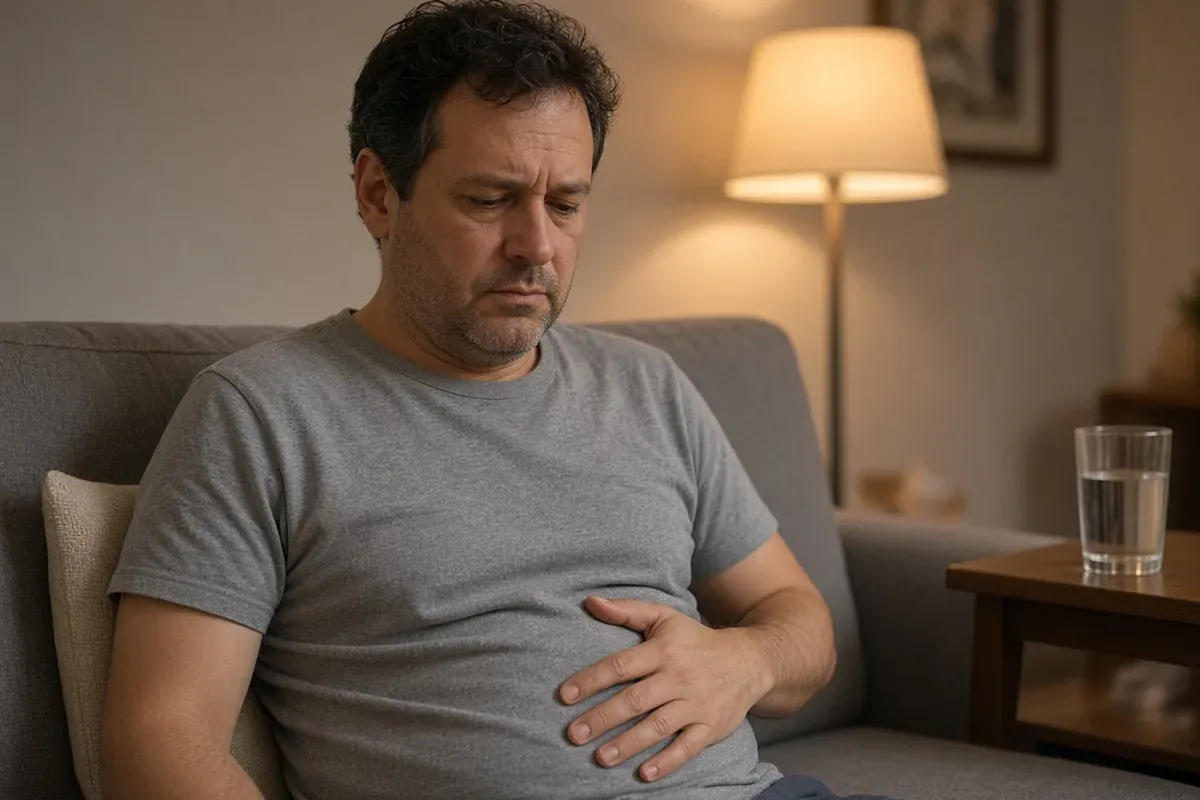
The Wegovy and Zepbound medication guides tell patients to contact their healthcare provider if they have symptoms of gallbladder problems, including:
- pain in the upper stomach area (abdomen);
- fever;
- yellowing of the skin or the whites of the eyes (jaundice);
- clay-colored stools.
Mayo Clinic describes gallstone pain as sudden and quickly intensifying, felt in the upper right part of the belly or the center just below the breastbone, sometimes spreading to the back between the shoulder blades or the right shoulder, often with nausea or vomiting. It can last from several minutes to a few hours. NIDDK adds that gallbladder attacks often follow heavy meals and usually happen in the evening or at night, and that one attack is often followed by more.
Get care right away if you have any of these, which Mayo Clinic and NIDDK list as signs of a possible serious complication:
- belly pain so intense you cannot sit still or get comfortable, or pain lasting several hours;
- fever or chills with belly pain;
- yellowing of the skin or eyes;
- tea-colored urine or light-colored stools;
- ongoing nausea and vomiting.
Severe, constant belly pain that may spread to the back can also be a sign of pancreatitis, a separate warning on GLP-1 labels (see GLP-1s and pancreatitis). You do not need to work out which it is. Contact your clinician or seek urgent care, and mention that you take a GLP-1 medicine. Our Side Effects hub covers other warning signs.
Gallbladder pain vs everyday GLP-1 stomach side effects
Digestive side effects are very common on GLP-1s, especially in the first weeks and after dose increases, so it is reasonable to wonder how to tell them apart. There is no reliable home test, but there are some general differences:
- Typical GLP-1 side effects such as nausea, fullness, burping, bloating, constipation or diarrhea tend to be spread out rather than in one spot, are often worse after eating too much, and usually ease over days or weeks. Our guides on GLP-1 nausea and constipation and diarrhea cover these.
- Gallbladder pain is usually more specific and stronger: a steady pain in the upper right or upper middle belly, often after a larger or fattier meal, that may spread to the back or right shoulder and can last for hours.
- Red flags such as fever, yellowing, dark urine, pale stools or pain that keeps getting worse are never “normal” side effects.
If you are not sure, ask. The labels say that if gallstones or gallbladder inflammation are suspected, “gallbladder studies and appropriate clinical follow-up are indicated.”
What happens if a gallbladder problem is suspected
In practice, “gallbladder studies” usually start with a physical exam, blood tests and an ultrasound of the belly. In a short educational video, a general surgeon at Norman Regional Hospital explains that he would want someone on a GLP-1 with recurring pain under the right ribs to be evaluated and possibly have imaging, and that pain together with fever needs prompt evaluation because it can mean acute cholecystitis.
If gallstones are found but cause no symptoms, NIDDK says treatment is usually not needed. If they are causing attacks or complications, the usual treatment is surgery to remove the gallbladder (cholecystectomy), one of the most common operations in US adults. Most are done laparoscopically through small incisions, often as outpatient surgery, and NIDDK says most people return to normal activity in about a week. You can live normally without a gallbladder; bile simply flows straight from the liver into the intestine. A small number of people have softer, more frequent stools afterward, which is usually temporary.
Your prescriber will decide what to do about your GLP-1 medicine during and after a gallbladder problem. Do not stop, skip or restart doses on your own.
Can you take a GLP-1 if you have had gallstones or gallbladder surgery?
Neither the Wegovy nor the Zepbound prescribing information lists gallstones or past gallbladder removal as a reason not to use the medicine. Their contraindications are limited to a personal or family history of medullary thyroid cancer or MEN 2 and serious allergy to the drug.
That does not mean gallbladder history is irrelevant. In a teaching video on prescribing GLP-1s for weight loss, Dr. Lee-Shing Chang, an endocrinologist at Brigham and Women’s Hospital, lists known or active gallbladder disease among the conditions where these medicines “should be used with caution.” Tell your prescriber about any history of gallstones, gallbladder attacks or surgery so they can factor it into your plan.
Ways that may lower your risk
No step can guarantee you will avoid gallstones, and these points are general guidance, not a personal plan. They come from Mayo Clinic, NIDDK and the research above.
- Do not skip meals or fast for long stretches. Mayo Clinic advises sticking to usual mealtimes because skipping meals or fasting can raise gallstone risk. On a GLP-1, that may mean several smaller meals rather than one large one. See what to eat on a GLP-1.
- Aim for steady, not extreme, weight loss. Mayo Clinic’s gallstone advice is to lose about 1 to 2 pounds a week. Your dose schedule is up to your prescriber, but avoid adding crash diets or very-low-calorie plans on top of your medicine.
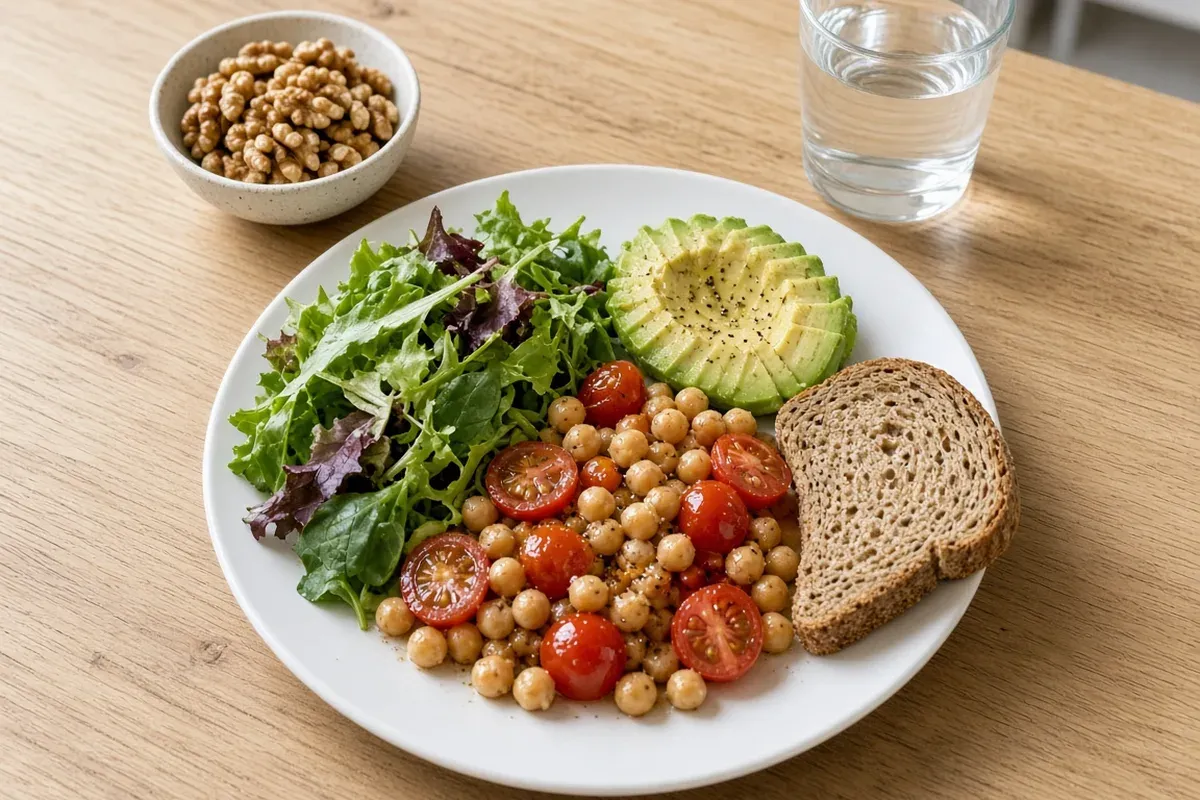
- Eat fiber-rich foods. Both Mayo Clinic and NIDDK suggest more fruits, vegetables and whole grains, and NIDDK suggests fewer refined carbohydrates and less sugar.
- Do not cut fat to almost zero. NIDDK recommends including healthy fats. In a small 1998 study of people on very-low-calorie diets, 6 of 11 people eating about 3 grams of fat a day developed (silent) gallstones, compared with none of 11 eating about 12 grams a day, likely because the extra fat kept the gallbladder emptying. That study involved diet alone, not GLP-1s, but the principle of giving your gallbladder a reason to empty is sensible. Olive oil, nuts, avocado and fish are easy options.
- Get enough protein and stay active. NIDDK says regular physical activity may lower your chances of gallstones and recommends at least 150 minutes a week of moderate activity plus muscle-strengthening twice a week. See how much protein you need on a GLP-1 and strength training on GLP-1s.
- Avoid repeated losing and regaining. NIDDK warns that weight cycling may lead to gallstones, and the more weight lost and regained, the greater the chance. A plan for the long term matters; see how to maintain weight loss.
- Ask about preventive medicine only if it applies. NIDDK says ursodiol, a bile acid medicine, can help prevent gallstones in people losing weight rapidly through very-low-calorie diets or weight-loss surgery. The Wegovy and Zepbound labels do not recommend it for routine use, so this is a specific question for your clinician, not something to start on your own.
What people are saying online
On X, gallbladder stories are a regular part of the GLP-1 conversation. A widely shared tabloid story described a woman who lost 75 pounds on Mounjaro (tirzepatide) and then needed her gallbladder removed. Some scientists and nutrition commentators point out that gallstones are a known risk of any rapid weight loss and cite the very-low-calorie diet studies on dietary fat. Others share the new Mayo Clinic-led study as evidence that the risk has been overstated, without mentioning that other recent studies found a small increase. On YouTube, surgeons and endocrinologists tend to give the same message as the labels: the medicines work well, gallbladder problems are uncommon but real, and pain under the right ribs, especially with fever, should be checked. Individual stories are worth listening to, but they cannot tell you how common a problem is; the trial numbers above do that better.
Questions to ask your prescriber
- Does anything in my history (gallstones, gallbladder attacks, gallbladder surgery, liver disease) change whether this medicine is right for me?
- How fast should I expect to lose weight, and at what pace should I let you know?
- Which symptoms should I call you about, and which mean I should go to urgent care?
- If I develop gallbladder symptoms, what would happen with my medicine?
- Is there anything about my eating pattern, such as skipping meals or eating very little fat, that I should change?
The bottom line
GLP-1 medications are linked to a modest increase in gallbladder problems, mainly gallstones and gallbladder inflammation. In the weight-loss trials, these were reported in roughly 1% to 2.5% of people on the drugs compared with up to about 1% on placebo, and a large meta-analysis estimated about 27 extra cases per 10,000 people a year. The risk seems to come from both rapid weight loss and slower gallbladder emptying, and it is higher at weight-loss doses and with longer use. Knowing the warning signs, eating regular meals with fiber and some healthy fat, aiming for steady weight loss and telling your prescriber about any gallbladder history are sensible ways to stay on the safe side.
Explore more in the Side Effects hub, or start with the basics in the GLP-1 Guide hub. For eating well while your appetite is low, visit the Eating on GLP-1s hub.
Frequently asked questions
Do GLP-1 medications cause gallstones?
They are linked to a higher risk. The prescribing information for Wegovy says treatment is associated with an increased occurrence of gallstones (cholelithiasis) and gallbladder inflammation (cholecystitis), and the Zepbound label says the same for tirzepatide and GLP-1 medicines as a class. In the Wegovy injection weight-loss trials, gallstones were reported in 1.6% of adults on the drug versus 0.7% on placebo. Most people who take these medicines do not develop gallbladder problems.
How common are gallbladder problems on semaglutide or tirzepatide?
Uncommon. In the trials summarized in the labels, gallstones were reported in 1.6% of adults on Wegovy injections (0.7% on placebo) and 2.5% on Wegovy tablets (1% on placebo). In the Zepbound weight-loss trials, gallstones were reported in 1.1% versus 1%, cholecystitis in 0.7% versus 0.2%, and gallbladder removal in 0.2% versus none. A 2022 meta-analysis estimated about 27 additional cases of gallbladder or bile duct disease per 10,000 people treated per year.
Why do GLP-1s affect the gallbladder?
Two mechanisms are thought to be involved. First, losing weight quickly makes the liver release extra cholesterol into bile, which can form stones. Second, GLP-1 can slow how the gallbladder empties, partly by reducing a gut hormone called cholecystokinin, so bile sits longer and becomes more concentrated. The Wegovy label notes that gallbladder problems were more common on the drug than on placebo even after accounting for how much weight people lost.
What are the symptoms of a gallbladder problem on a GLP-1?
The Wegovy and Zepbound medication guides list pain in the upper stomach area, fever, yellowing of the skin or eyes (jaundice) and clay-colored stools. Mayo Clinic adds that gallstone pain can be felt in the upper right or center of the belly, between the shoulder blades or in the right shoulder, often with nausea or vomiting, and can last from several minutes to a few hours. Contact your clinician about any of these, and get urgent care for severe pain, fever with chills or yellowing of the skin or eyes.
How can I tell gallbladder pain from normal GLP-1 stomach side effects?
It can be hard, which is why new or unusual pain should be checked. Common GLP-1 side effects such as nausea, bloating, constipation or mild cramping tend to be diffuse and often ease after dose increases. Gallbladder pain is usually more specific: a steady, often intense pain in the upper right or upper middle belly that can spread to the back or right shoulder, often after a large or fatty meal and in the evening or at night. Severe belly pain that does not go away can also be a sign of pancreatitis, so do not try to sort this out on your own.
Can you take a GLP-1 if you have had your gallbladder removed?
Having had your gallbladder removed is not listed as a contraindication in the Wegovy or Zepbound prescribing information, and NIDDK notes that people can live normally without a gallbladder. People with known or active gallbladder disease are usually treated with extra caution, so tell your prescriber about any history of gallstones, gallbladder attacks or gallbladder surgery so they can weigh it in their decision.
Can I prevent gallstones while taking a GLP-1?
There is no guaranteed way, but general advice from Mayo Clinic and NIDDK may lower your risk: avoid skipping meals or long fasts, aim for a steady pace of weight loss, eat plenty of fiber-rich foods, include some healthy fats rather than eating almost no fat, stay active and avoid repeated losing and regaining. NIDDK says the medicine ursodiol can help prevent gallstones in people losing weight rapidly through very-low-calorie diets or weight-loss surgery; whether it makes sense for anyone on a GLP-1 is a question for their clinician.
Should I stop my GLP-1 if I think I have a gallbladder problem?
Do not make that decision alone. Contact the clinician who prescribes your medicine right away. The labels say that if gallstones or cholecystitis are suspected, gallbladder tests (often an ultrasound) and clinical follow-up are needed, and your prescriber will decide what to do about your medicine. If you have severe pain, fever or yellowing of your skin or eyes, seek urgent care first.
Sources
- FDA label: WEGOVY (semaglutide) injection and tablets, prescribing information (revised 2026)
- DailyMed: WEGOVY (semaglutide) prescribing information and Medication Guide
- DailyMed: ZEPBOUND (tirzepatide) prescribing information and Medication Guide (September 2026)
- DailyMed: SAXENDA (liraglutide) prescribing information (June 2026)
- He L et al. Association of GLP-1 receptor agonist use with risk of gallbladder and biliary diseases: a systematic review and meta-analysis of randomized clinical trials. JAMA Intern Med 2022
- Nexøe-Larsen CC et al. Effects of liraglutide on gallbladder emptying: a randomized, placebo-controlled trial in adults with overweight or obesity. Diabetes Obes Metab 2018 (abstract via Europe PMC)
- Sodhi M et al. Risk of gastrointestinal adverse events associated with GLP-1 receptor agonists for weight loss. JAMA 2023
- Retrospective cohort study of GLP-1 receptor agonists vs DPP-4 inhibitors and gallbladder disease in type 2 diabetes. Curr Med Res Opin 2026 (abstract via Europe PMC)
- Ghusn W et al. Biliary and pancreatic safety of incretin-based therapies in obesity and type 2 diabetes. J Clin Med 2026 (abstract)
- Weinsier RL et al. Medically safe rate of weight loss for the treatment of obesity: a guideline based on risk of gallstone formation. Am J Med 1995 (abstract via Europe PMC)
- Festi D et al. Gallbladder motility and gallstone formation in obese patients following very low calorie diets. Int J Obes 1998 (abstract via Europe PMC)
- NIDDK: Definition & Facts for Gallstones
- NIDDK: Symptoms & Causes of Gallstones
- NIDDK: Treatment for Gallstones
- NIDDK: Dieting & Gallstones
- Mayo Clinic: Gallstones, symptoms and causes (April 2025)
- YouTube: Gallbladder Risks with GLP-1 Weight Loss Medications (general surgeon, Norman Regional Hospital)
- YouTube: Prescribing GLP-1 Receptor Agonists for Weight Loss (Dr. Lee-Shing Chang, Brigham and Women's Hospital)
Keep reading in Side Effects
- GLP-1s and Pancreatitis: What the Label Says, What the Research Shows and the Warning Signs to KnowDo GLP-1 medications like semaglutide and tirzepatide cause pancreatitis? A plain-English, evidence-based guide to what the FDA labels say, how often pancreatitis happened in trials, what large studies and drug-safety regulators have found, who may be at higher risk, and the symptoms that need urgent care.
- Constipation and Diarrhea on GLP-1sWhy semaglutide and tirzepatide can cause constipation or diarrhea, how often it happened in trials, how long it tends to last, practical food, fluid and bathroom-habit strategies, and the warning signs that need a clinician fast.
- GLP-1 Nausea: Why It Happens and How to Manage ItWhy GLP-1 medications cause nausea, how often it happens in trials, whether all weight-loss drugs cause it, food and dosing strategies clinicians use, and when to call a doctor.
See the full Side Effects hub →

Know someone who would enjoy this?