Part of: GLP-1 Weight Loss: The Complete Guide · Starting treatment
GLP-1 Weight-Loss Timeline: What Studies Show Month by Month
How fast do GLP-1 medications work? A month-by-month look at what clinical trials and real-world studies of semaglutide (Wegovy), tirzepatide (Zepbound) and GLP-1 pills show: the slow first weeks, the dose-escalation months, when weight loss usually levels off, why results vary, and when to talk to your prescriber.


“How long until it works?” is one of the first questions people ask when they start a GLP-1 medication, and one of the most common worries a few weeks in, when the scale has barely moved. Social media does not help. Before-and-after photos tend to skip the slow early months, while some posts claim dramatic losses in the first few weeks.
The good news is that large clinical trials and real-world studies give a fairly clear picture of how weight loss typically unfolds over time with semaglutide (Wegovy), tirzepatide (Zepbound) and the newer GLP-1 pills. This guide walks through that timeline month by month, explains why it looks the way it does, and covers what the research says about slow starters, plateaus and stopping.
Educational only. This is not medical advice. Your own timeline depends on your health, your medicine and your dose plan. Decisions about starting, adjusting, pausing or stopping a GLP-1 medication should be made with a licensed clinician who knows your health history.
The short answer
GLP-1 weight loss is gradual, and the first month is usually the slowest part. Treatment starts at a low dose that is raised step by step over roughly four to five months, so weight loss tends to build during that period, continue steadily through most of the first year, and then level off. In the semaglutide trials, average weight loss levelled off around week 60. By the end of the main trials, people had lost an average of about 15% of their starting weight at 68 weeks on semaglutide 2.4 mg and 15% to 21% at 72 weeks on tirzepatide, depending on the dose. Individual results vary a lot in both directions.
The timeline at a glance
The table below pulls together averages from the studies discussed in this article. It is a rough map, not a forecast for any one person.
| Time on treatment | What is usually happening | What studies show (averages) |
|---|---|---|
| Weeks 1 to 4 | Lowest starting dose; body adjusting; side effects most likely to appear | Little published trial data; physicians describe 0 to about 5 pounds as common |
| Around 3 months | Dose still being increased | About 6% in a Mayo Clinic semaglutide study; 82% of people on tirzepatide in SURMOUNT-1 had lost 5% or more by week 12 |
| Around 5 months | Most people reaching their maintenance dose | 10.6% at week 20 in the STEP 4 semaglutide run-in |
| Around 6 months | Steady loss for many people | About 11% in the Mayo Clinic semaglutide study |
| About 1 year | Loss slowing | Median 14.4% for people who stayed on treatment 12 months or more in one academic clinic |
| 14 to 17 months | Weight usually levelling off | 14.9% at week 68 (semaglutide 2.4 mg); 15.0% to 20.9% at week 72 (tirzepatide 5 to 15 mg) |
| 2 to 3 years | Maintenance while treatment continues | 15.2% at week 104 (STEP 5); 12.3% to 19.7% at week 176 (SURMOUNT-1, people with prediabetes) |
Different studies enrolled different people, used different doses and measured weight in different ways, so the numbers in different rows are not directly comparable. To put percentages in pounds: for someone who starts at 220 pounds, 5% is 11 pounds, 10% is 22 pounds and 15% is 33 pounds.
Why GLP-1 weight loss starts slowly
Two features of these medicines shape the early timeline.
First, the dose starts low on purpose. According to the FDA-approved labels, Wegovy injections start at 0.25 mg once a week for four weeks, then increase every four weeks until the maintenance dose is reached at week 17. Zepbound starts at 2.5 mg once a week for four weeks, with increases of 2.5 mg after at least four weeks at each step. The labels say this gradual approach is meant to reduce the risk of gastrointestinal side effects, and both allow the prescriber to slow it down if a step is not tolerated. The starting doses are not designed to produce the full effect. Your prescriber sets your own schedule.
Second, the medicines work mainly by turning down appetite, which changes how much you eat over weeks and months rather than overnight. Our explainer on how GLP-1 medications work for weight loss covers the biology in more detail. Because the effect builds with the dose, the weight curve in trials is fairly smooth: a gentle start, a steeper middle and a gradual flattening.
Month 1: getting used to the medicine
The first four weeks are mostly about learning how your body responds. The large trials mainly report results at later time points, so there is little published data on the first month alone. Clinicians who treat many patients describe a wide range.
In a YouTube video on what happens in months one, three and six, an obesity medicine physician who goes by Dr. Megan says that, in her practice, having lost anywhere from zero to five pounds after the first month is “pretty standard,” that some people’s weight does not move at all, and that this does not worry her because the first doses are mainly there to help the body adjust. She also notes that some people barely feel the first doses, while others have strong side effects.

A few practical points about month one:
- Side effects are most likely now and during each dose increase. The Zepbound label says most nausea, vomiting and diarrhea occurred during dose escalation and decreased over time, and the Wegovy label says gastrointestinal reactions with the tablets were reported most often during dose escalation. Our guides to GLP-1 nausea and constipation and diarrhea cover what helps.
- Early scale changes can include water. Eating and drinking differently changes how much water your body holds, so the first few pounds, or the lack of them, are not a reliable guide to the long-term result. The Plateaus and Maintenance hub explains water weight versus fat loss.
- This is the time to build habits. Smaller portions, enough protein, fluids and some activity are easier to set up early. See what to eat on a GLP-1 and our first 30 days guide.
Months 2 to 4: the dose-escalation phase
As the dose rises, appetite effects usually become stronger and weight loss tends to pick up. Real-world data give a sense of the pace.
In a 2022 study from the Mayo Clinic, researchers looked at adults with overweight or obesity who were prescribed weekly semaglutide injections at 1.7 mg or 2.4 mg in a weight-management clinic. Among 175 people with data at 3 months, the average loss was 6.7 kg (about 15 pounds), or 5.9% of body weight. This was an observational study at a specialist center, not a randomized trial.
Tirzepatide trial data show a similar early phase. In a post hoc analysis of the SURMOUNT-1 trial, which looked back at 1,545 people who took tirzepatide and received most of their planned doses, 82% had lost at least 5% of their weight by week 12, and the other 18% had lost less than that.
A large US study of electronic health records published in JAMA Internal Medicine in 2024 compared people starting tirzepatide or semaglutide in formulations labeled for type 2 diabetes, used on or off label, in people with overweight or obesity. Among those still on treatment, average loss at 3 months was 5.9% with tirzepatide and 3.6% with semaglutide. About half of the people in that study had type 2 diabetes, which tends to slow weight loss, and many did not reach the highest doses, so these numbers run lower than the obesity trials.
Months 4 to 6: reaching the maintenance dose
By about the fifth month, most people following the label schedules are at or near their maintenance dose. The STEP 4 trial gives a clean snapshot of this point for semaglutide: all 902 participants took semaglutide for a 20-week run-in, made up of 16 weeks of dose escalation and 4 weeks at 2.4 mg. The 803 people who reached the full dose had lost an average of 10.6% of their weight by week 20.
At 6 months in the Mayo Clinic study, the 102 people with follow-up data had lost an average of 12.3 kg (about 27 pounds), or 10.9%. Of those, 87.3% had lost at least 5%, 54.9% at least 10%, and 23.5% at least 15%.
For tirzepatide, the SURMOUNT-1 trial raised doses through week 20. In the 2024 health-records study, people still taking tirzepatide had lost an average of 10.1% at 6 months, compared with 5.8% for semaglutide, again in a mixed group that included many people with diabetes.
Months 6 to 12: steady progress, then slowing
For many people, the second half of the first year brings continued but gradually slower loss. In an academic obesity clinic study published in 2025, which followed 2,306 people prescribed semaglutide or tirzepatide through a no-cost program, those who stayed on treatment for at least 6 months had lost a median of 9.4%, and those who stayed on for at least 12 months had lost a median of 14.4%. The median means half lost more and half lost less. The authors noted that only 23% of semaglutide users reached the 2.4 mg dose and 28% of tirzepatide users reached 15 mg, yet results still came close to those seen in trials.
In the 2024 health-records study, average loss at 12 months for people still on treatment was 15.3% with tirzepatide and 8.3% with semaglutide.
Months 12 to 18: the plateau
In trials, weight loss eventually levels off even when people keep taking the medicine. In the paper reporting the two-year STEP 5 trial, the authors wrote that weight loss with semaglutide “plateaued after approximately week 60” and that in the 68-week trials, weight, waist size, blood pressure and blood sugar measures also appeared to plateau around week 60.
Here is how the main trials ended:
| Medicine (trial) | Length | Average weight change | Lost 5% or more |
|---|---|---|---|
| Semaglutide 2.4 mg weekly injection (STEP 1) | 68 weeks | −14.9% vs −2.4% with placebo | 86.4% vs 31.5% |
| Tirzepatide 5 mg weekly injection (SURMOUNT-1) | 72 weeks | −15.0% vs −3.1% with placebo | 85% vs 35% |
| Tirzepatide 10 mg weekly injection (SURMOUNT-1) | 72 weeks | −19.5% | 89% |
| Tirzepatide 15 mg weekly injection (SURMOUNT-1) | 72 weeks | −20.9% | 91% |
| Semaglutide 25 mg daily tablet (Wegovy label, Study 7) | 64 weeks | −13.6% vs −2.4% with placebo | 76.3% vs 31.3% |
| Orforglipron 17.2 mg daily tablet (Foundayo label, Trial 1) | 72 weeks | −11.1% vs −2.1% with placebo | 71.5% vs 26.8% |
All of these trials excluded people with type 2 diabetes and included advice on a reduced-calorie diet and physical activity for both the medicine and placebo groups. In STEP 1, half of people on semaglutide (50.5%) lost 15% or more. In SURMOUNT-1, 50% and 57% of people on the 10 mg and 15 mg tirzepatide doses lost 20% or more. The trials were run separately, so comparing rows is only a rough guide; our GLP-1 pills vs injections comparison goes into more detail.
A plateau after a year or so is expected. As weight falls, the body needs fewer calories and appetite pushes back, until intake and burn reach a new balance. Our article on why weight loss plateaus explains this in plain terms. If you have stalled while still on treatment, our guide to hitting a plateau on a GLP-1 lists what to review with your prescriber.
Year 2 and beyond: maintenance while on treatment
For people who keep taking the medicine, the trials show that most of the weight loss is maintained. In STEP 5, average loss with semaglutide 2.4 mg was 15.2% at 104 weeks, compared with 2.6% with placebo. (See semaglutide clinical trial results, summarized for STEP 5 and the other semaglutide trials.) In the three-year results from SURMOUNT-1, which focused on people with obesity and prediabetes, average loss at 176 weeks was 12.3%, 18.7% and 19.7% with the 5 mg, 10 mg and 15 mg doses, compared with 1.3% with placebo. Only 1.3% of people on tirzepatide developed type 2 diabetes during that time, compared with 13.3% on placebo.
What you do during this phase still matters. Strength training and enough protein help protect muscle, and long-term habits shape what happens if treatment ever stops. See strength training on GLP-1s, how much protein you need on a GLP-1 and how to maintain weight loss.
Slow start? What the research says about “late responders”
Older obesity guidelines from 2015 suggested stopping a weight-loss medicine if a person had not lost at least 5% within 12 weeks. Newer studies suggest that rule may be too strict for today’s medicines, which take months to reach their full dose.
- Tirzepatide: In the SURMOUNT-1 analysis, 278 people (18%) had lost less than 5% at week 12. By week 24, 70% of them had reached 5%, and by week 72, 90% had, taking an average of about 25 weeks to get there. Their average loss at week 72 was 11.0%, compared with 22.5% for early responders. Only 1.8% of all participants were still under 5% at week 72; almost half of those were on the lowest dose, and a few had missed several doses in a row.
- Semaglutide: In a STEP 4 analysis, 88% of people had lost at least 5% by week 20 and went on to an average loss of 19.7% by week 68. Those who had not reached 5% by week 20 still lost an average of 6.4% by week 68 if they kept taking semaglutide, compared with 0.3% if they were switched to placebo.
In short, a slow start often still leads to meaningful weight loss, but slower starters tend to lose less overall. In the SURMOUNT-1 analysis, slower responders were more likely to be men, to have a higher starting weight and to have high blood pressure. The Mayo Clinic Diet program, run by Mayo Clinic, notes that if someone has not lost at least 5% after three to six months on the full dose, their provider may change or stop the treatment. That is a decision to make together with your prescriber.
Why your timeline may look different
Averages hide a wide spread. The studies above point to several factors linked to slower or smaller weight loss:
- The medicine and dose. Higher doses produced more weight loss in the tirzepatide and orforglipron trials, and tirzepatide produced more on average than semaglutide in the health-records study.
- Type 2 diabetes. In the Mayo Clinic study, people with type 2 diabetes lost 3.9% at 3 months and 7.2% at 6 months, compared with 6.3% and 11.8% for those without. The Foundayo label shows the same pattern: 9.6% at the top dose in people with diabetes versus 11.1% in those without.
- Missed doses and restarts. The Wegovy label says that after two or more missed weekly injections, dose escalation may need to restart at a lower dose, and several of the slowest responders in SURMOUNT-1 had missed doses in a row.
- Staying on treatment. In the 2024 health-records study, more than half of people stopped their medicine during follow-up. In a 2025 study of people who stopped within a year, the most common reason was cost or insurance (47.6%), followed by side effects (14.6%) and supply shortages (11.8%). Only 1.7% stopped because of unsatisfactory weight loss.
- Everything else. Sex, age, starting weight, other medicines, sleep, stress, eating patterns and activity all play a part. None of these make GLP-1s work or fail on their own.
If cost is the issue, our guides on semaglutide cost without insurance and insurance coverage for GLP-1s may help.
What happens to the timeline if you stop
Weight loss from GLP-1s usually depends on continuing treatment. In STEP 4, people who switched to placebo after the 20-week run-in regained 6.9% of their body weight over the next 48 weeks, while those who continued semaglutide lost another 7.9%. Real-world results are more mixed. In a 2026 study of 7,938 people who stopped semaglutide or tirzepatide within their first year, average weight change in the year after stopping was small, but it varied a lot from person to person, and many restarted the same drug (19.6%) or began another obesity treatment (35.2%).
If you are thinking about stopping or pausing for any reason, talk with your prescriber first. Our article on how to maintain weight loss covers what the research shows about life after a GLP-1.
How to track your progress fairly
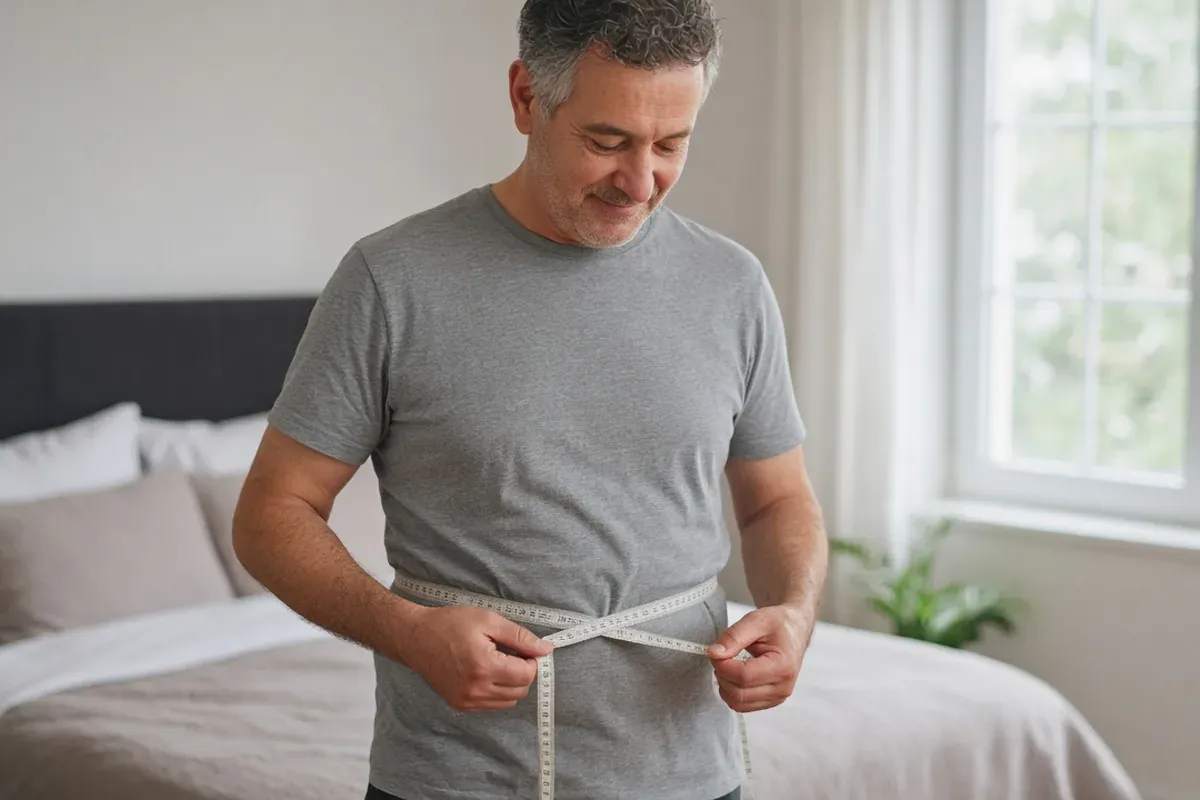
- Measure the same way each time. Weigh at the same time of day, on the same scale, and focus on the weekly or monthly trend rather than daily swings.
- Think in percentages. Trials report percent of starting weight, so a 10-pound loss means something different at 180 pounds than at 300 pounds.
- Look beyond the scale. Waist size, how clothes fit, energy, blood pressure, blood sugar and how easily you can climb stairs can all improve even when the scale is slow.
- Bring notes to appointments. A simple log of weight, doses taken, missed doses and side effects makes it easier for your prescriber to judge whether your plan is working.
When to talk to your prescriber
Contact your care team if:
- you have lost little or no weight after several months, especially once you are on your maintenance dose;
- side effects are making it hard to eat, drink enough fluids or take the medicine as prescribed;
- you have severe or persistent stomach pain, repeated vomiting, or signs of dehydration;
- you are losing weight much faster than expected or are eating very little;
- you have missed doses, or cost or supply problems are interrupting treatment;
- you are thinking about stopping, switching or changing your dose.
Do not change your dose or schedule on your own. If you are not yet on treatment, our guides on who qualifies for GLP-1 treatment and how to get a GLP-1 prescription explain the first steps.
What people are saying online
On X, people often share their early numbers, from posts celebrating a double-digit loss in the first month on tirzepatide to threads asking “why am I barely losing weight?” several weeks in. Researchers and physicians on the platform tend to push back on the scale as the only measure, encouraging people in midlife to protect muscle, strength and function during weight loss. On YouTube, obesity medicine physicians describe month one as an adjustment period with modest or no loss and month three as the point when many people have a routine and early side effects are starting to fade, while stressing that experiences differ widely. Personal stories can be encouraging, but they are not evidence and cannot predict your own timeline.
The bottom line
GLP-1 weight loss follows a fairly predictable shape: a slow first month on a low starting dose, steadier loss as the dose rises over about four to five months, continued but slowing loss through the rest of the first year, and a plateau around 14 months in the semaglutide trials. Averages at the end of the main trials ranged from about 11% with the top orforglipron dose to about 21% with the top tirzepatide dose. Slow early progress does not always mean the medicine is not working, but steady tracking and regular check-ins with your prescriber are the best way to know whether your plan is on course.
Explore more in the GLP-1 Guide hub, the Semaglutide hub, the Tirzepatide hub and the Plateaus and Maintenance hub. New to these medicines? Start with what a GLP-1 medication is.
Frequently asked questions
How long does it take for a GLP-1 to start working for weight loss?
Effects on appetite can start within the first weeks, but noticeable weight loss usually takes longer, because treatment starts at a low dose that is raised step by step over about four to five months. In an observational Mayo Clinic study of semaglutide, people had lost an average of 5.9% of their weight at 3 months and 10.9% at 6 months. Some people lose very little in the first month, and that alone is not a sign the medicine has failed.
How much weight do people lose in the first month on a GLP-1?
It varies widely, and large trials mostly report results at later time points. The first four weeks are spent on the lowest starting dose, which is meant to help the body adjust and reduce side effects. An obesity medicine physician on YouTube describes losing anywhere from zero to about five pounds in month one as pretty standard in her practice. Early loss often includes some water, so the first weeks are not a reliable guide to the long-term result.
When does weight loss on a GLP-1 plateau?
In the semaglutide STEP trials, average weight loss levelled off around week 60, a little over a year in, and stayed there through two years in the STEP 5 trial for people who kept taking the medicine. Tirzepatide trials show a similar pattern of slowing over the second half of the first year. Individual plateaus can happen earlier or later, and a plateau after a year of treatment usually reflects the body reaching a new balance rather than the drug wearing off.
Is it normal to lose weight slowly on Wegovy or Zepbound?
Yes, for some people. In a SURMOUNT-1 analysis, 18% of people on tirzepatide lost less than 5% of their weight in the first 12 weeks, yet 90% of those slower starters reached at least 5% by week 72, and they took about 25 weeks on average to get there. A STEP 4 analysis found that people who had lost less than 5% at week 20 on semaglutide still lost an average of 6.4% by week 68 if they continued. Slower starters tended to lose less overall, so it is worth reviewing progress with your prescriber.
How much weight can you lose on a GLP-1 in a year?
Averages from the main trials were about 15% of starting weight at 68 weeks with semaglutide 2.4 mg injections, 15% to 21% at 72 weeks with tirzepatide (5 mg to 15 mg), about 14% at 64 weeks with the 25 mg semaglutide pill, and about 11% at 72 weeks with the top dose of orforglipron (Foundayo). In one academic obesity clinic, people who stayed on treatment for at least a year lost a median of 14.4%. These are averages; some people lose much more and some much less.
Why do some people lose more weight than others on GLP-1s?
Studies point to several factors: the specific medicine and dose, whether a person reaches and stays on the maintenance dose, missed doses, sex, starting weight and whether a person has type 2 diabetes. In a Mayo Clinic study, people with type 2 diabetes lost 7.2% at 6 months versus 11.8% for those without. In SURMOUNT-1, slower early responders were more often men and had higher starting weights. Eating patterns, activity, sleep and other medicines also play a role.
Do GLP-1 pills work as fast as injections?
The pills also start at a low dose and are increased gradually, about every 30 days. In their main trials, average loss was 13.6% at 64 weeks with the 25 mg semaglutide tablet and 11.1% at 72 weeks with the top 17.2 mg dose of orforglipron, compared with about 15% for semaglutide 2.4 mg injections and up to about 21% for tirzepatide injections. The trials were run separately, in different groups of people, so these figures are not a direct head-to-head comparison.
What happens to my weight if I stop the medicine partway through?
In trials, weight tended to return after stopping. In STEP 4, people who switched from semaglutide to placebo after 20 weeks regained 6.9% of their weight over the next 48 weeks, while those who continued lost another 7.9%. Real-world studies show more variable results. Talk with your prescriber before stopping or pausing a GLP-1, including if cost, supply or side effects become a problem, because there may be other options.
Sources
- Wilding JPH et al. Once-weekly semaglutide in adults with overweight or obesity (STEP 1). N Engl J Med 2021 (abstract via Europe PMC)
- Rubino D et al. Effect of continued weekly subcutaneous semaglutide vs placebo on weight loss maintenance (STEP 4). JAMA 2021 (abstract via Europe PMC)
- Mosenzon O et al. Clinically-relevant weight loss is achieved independently of early weight loss response to semaglutide 2.4 mg (STEP 4 post hoc). J Endocr Soc 2021 (PMC8265765)
- Garvey WT et al. Two-year effects of semaglutide in adults with overweight or obesity: the STEP 5 trial. Nat Med 2022 (PMC9556320)
- Jastreboff AM et al. Tirzepatide once weekly for the treatment of obesity (SURMOUNT-1). N Engl J Med 2022 (abstract via Europe PMC)
- Ard J et al. Weight reduction over time in tirzepatide-treated participants by early weight loss response: post hoc analysis in SURMOUNT-1. Diabetes Obes Metab 2025 (PMC12326891)
- Jastreboff AM et al. Tirzepatide for obesity treatment and diabetes prevention (SURMOUNT-1, 3 years). N Engl J Med 2025 (abstract via Europe PMC)
- Ghusn W et al. Weight loss outcomes associated with semaglutide treatment for patients with overweight or obesity. JAMA Netw Open 2022 (PMC9486455)
- Rodriguez PJ et al. Semaglutide vs tirzepatide for weight loss in adults with overweight or obesity. JAMA Intern Med 2024 (PMC11231910)
- Samuels JM et al. Real-world titration, persistence and weight loss of semaglutide and tirzepatide in an academic obesity clinic. Diabetes Obes Metab 2025 (PMC12515774)
- Gasoyan H et al. Reasons for discontinuation of obesity pharmacotherapy with semaglutide or tirzepatide in clinical practice. Obesity 2025 (PMC12636059)
- Gasoyan H et al. Obesity treatments and weight changes in clinical practice after discontinuation of semaglutide or tirzepatide. Diabetes Obes Metab 2026 (PMC13146129)
- DailyMed: WEGOVY (semaglutide) injection and tablets, prescribing information
- DailyMed: ZEPBOUND (tirzepatide) injection, prescribing information
- FDA label: FOUNDAYO (orforglipron) tablets, prescribing information (revised 07/2026)
- Mayo Clinic Diet: How long do you spend on semaglutide for weight loss? (2024)
- YouTube: Why GLP-1 Feels Different at 1, 3, and 6 Months (Obesity Doctor)
Keep reading in GLP-1 Guide
- How to Get a GLP-1 PrescriptionA practical US guide to getting a GLP-1 weight-loss prescription: who can prescribe, BMI and label criteria, primary care vs specialist vs telehealth, what to bring to the visit, insurance and prior authorization, FDA-approved vs compounded medicine, and red flags for unsafe sellers.
- Who Should Not Take a GLP-1 Medication?A plain-English guide to who should not take GLP-1 weight-loss medicines such as semaglutide (Wegovy), tirzepatide (Zepbound) and orforglipron (Foundayo): the two official contraindications, pregnancy and breastfeeding, severe gastroparesis, past pancreatitis, diabetes medicines, eating disorders, surgery, and what changed on the labels in 2026.
- Who Qualifies for GLP-1 Weight-Loss Treatment?The FDA label criteria for Wegovy, Zepbound and other GLP-1 weight-management medicines explained: the BMI 30 and BMI 27 rules, which weight-related conditions count, who is usually not a candidate, how diabetes-only GLP-1s differ, and what to ask a clinician.
- How GLP-1 Medications Work for Weight LossHow semaglutide and tirzepatide cause weight loss: why natural GLP-1 lasts minutes but the drugs last a week, what they do in the brain and stomach, and why weight returns when they stop.
See the full GLP-1 Guide hub →

Know someone who would enjoy this?