Part of: Eating on GLP-1s · What to eat (and avoid)
Alcohol and GLP-1 Medications: What to Know Before You Drink
What the FDA labels, NIH and major medical centers say about drinking alcohol while taking semaglutide, tirzepatide or another GLP-1: nausea, dehydration, low blood sugar, pancreatitis, calories, and the early research on GLP-1s and the urge to drink.

Alcohol is one of the most common questions people ask once they start a GLP-1 medication. Can you still have a glass of wine with dinner? Will a night out make the nausea worse? And is it true that these drugs make people want to drink less?
The honest answer is that the official drug information says surprisingly little about alcohol, while the practical risks are real and well documented elsewhere. This guide pulls together what the FDA labels, the National Institutes of Health, US dietary guidance and major medical centers say, plus the early research on GLP-1s and drinking, so you can have a better-informed conversation with your prescriber.
Educational only. This is not medical advice. Whether, and how much, alcohol is safe for you depends on your health, your medicines and your history with alcohol. Ask the clinician who prescribes your GLP-1.
The short answer
- The labels do not ban alcohol. The FDA prescribing information for Wegovy (semaglutide), Zepbound (tirzepatide) and Foundayo (orforglipron) has no specific warning about drinking alcohol. When we searched the full label text, “alcohol” appeared only in swabs, inactive ingredients and medical terms such as “nonalcoholic steatohepatitis.”
- But alcohol overlaps with several labeled risks. It can worsen nausea, vomiting, reflux and dehydration. It raises the risk of low blood sugar in people who also take insulin or a sulfonylurea. And heavy drinking is a leading cause of pancreatitis, which is a labeled warning for these drugs.
- Expert nutrition guidance says keep it minimal. A 2025 joint advisory from four US professional societies lists “minimal alcohol intake” among the eating habits to encourage during GLP-1 therapy.
- Calories add up. Each US standard drink carries roughly 100 calories from the alcohol alone, with few nutrients, at a time when every bite and sip counts more.
- GLP-1s may reduce the urge to drink, but that is still being studied. Early trials and large observational studies are encouraging. No GLP-1 is approved to treat alcohol use disorder.
If you remember one thing: “not prohibited on the label” is not the same as “no effect.” Talk it through with your prescriber, especially if you have diabetes, a history of pancreatitis or gallbladder problems, or any concern about how much you drink.
What the FDA labels say, and what they don’t
The prescribing information, or label, is the official FDA-approved document for each medicine. It lists who the drug is for, who should not take it, known risks and how it interacts with other drugs.
For the main GLP-1 weight-management medicines, the labels do not:
- list alcohol as a contraindication,
- include an alcohol-specific warning, or
- report a study of how the drug changes the way the body absorbs or processes alcohol.
What the labels do contain are several warnings that alcohol can make more relevant. The Wegovy label, for example, includes sections on acute pancreatitis, gallbladder disease, hypoglycemia (low blood sugar) and “acute kidney injury due to volume depletion.” The Zepbound and Foundayo labels carry similar warnings. We walk through each of these below.
Drug-information references written for patients go a step further. Mayo Clinic’s semaglutide page, which uses Micromedex drug data, tells patients to follow their care team’s instructions about alcohol and notes that “drinking alcohol may cause severe low blood sugar,” while explaining that low blood sugar on semaglutide mainly occurs alongside other glucose-lowering medicines or in situations such as missed meals, extra exercise, alcohol or vomiting. NIAAA, the federal alcohol research institute, gives the general rule for any medicine: avoid alcohol if you are taking a medication and do not know its effect, and ask your pharmacist or clinician.
For background on how these medicines work, see what a GLP-1 medication is and how GLP-1s work for weight loss.
Why alcohol can feel different on a GLP-1
GLP-1 medicines act on appetite centers in the brain and slow the rate at which the stomach empties. Many people eat noticeably less, and some eat very little on certain days. That changes the setting in which alcohol arrives:
- Less food in the stomach. Drinking on an empty or nearly empty stomach is already known to raise the risk of low blood sugar in people on glucose-lowering medicines. MedlinePlus advises people with diabetes never to skip meals or “have alcohol in place of a meal.”
- A stomach that is already sensitive. Nausea, fullness and reflux are the most common GLP-1 side effects, especially after starting or raising a dose. Alcohol irritates the stomach lining and can add to all three.
- Smaller appetite, same drink. If you eat half of what you used to, the calories and lack of nutrients in alcohol make up a larger share of your day.
You may see claims online that GLP-1s make people get drunk faster or that they “block” alcohol. We did not find controlled studies in the labels or the trials we reviewed that measured blood alcohol levels after a typical drink in people taking these medicines for weight loss, so treat those claims as unproven. What is well established is that individual responses to alcohol vary, and that alcohol and medicines “can interact harmfully even if they are not taken at the same time,” as NIAAA puts it.
Risk 1: nausea, vomiting and reflux
This is the most common way alcohol and GLP-1s collide.
The 2025 joint advisory from the American College of Lifestyle Medicine, the American Society for Nutrition, the Obesity Medicine Association and The Obesity Society is direct about it: “Alcohol use may also worsen nausea and gastroesophageal reflux with GLP-1 therapy and should be minimized.” In its summary table of eating habits, the advisory lists “minimal alcohol intake” alongside regular small meals and adequate fluids.
In practice, alcohol tends to show up as a trigger in three situations:
- The first days after starting or increasing a dose, when stomach symptoms are usually strongest.
- Large or late meals with drinks, such as celebrations, restaurant dinners and holidays. The advisory also notes that vomiting is more likely after large meals.
- Carbonated or sugary drinks, such as beer, sparkling wine, hard seltzer and sweet cocktails, which some people find add bloating or queasiness.
Our guide to GLP-1 nausea covers food and timing strategies in detail, and what to eat on a GLP-1 explains why greasy food, big portions and alcohol hit harder than before.
Risk 2: dehydration and your kidneys
Alcohol increases fluid loss, and many people on GLP-1s already drink less water simply because they feel full. Add a bout of vomiting or diarrhea and fluid levels can fall quickly.
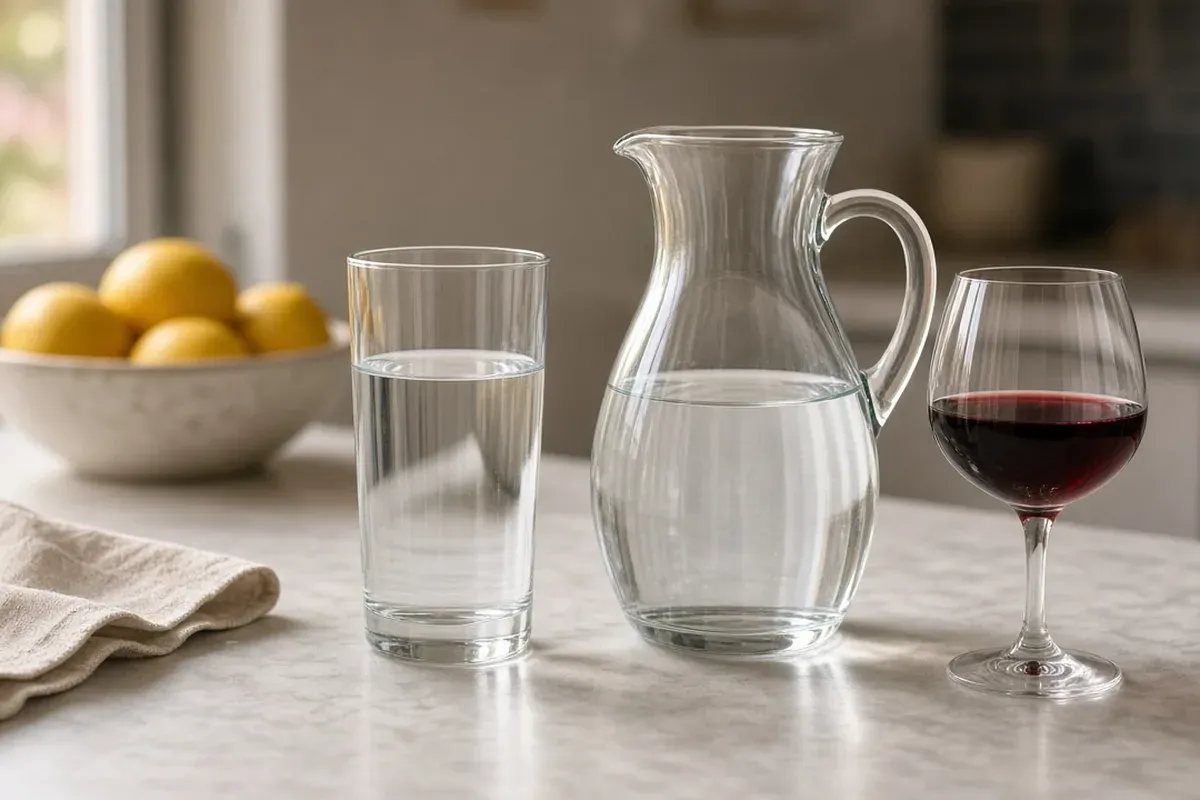
That matters because of a specific label warning. The Wegovy label describes postmarketing reports of acute kidney injury, “in some cases requiring hemodialysis,” and says “the majority of the reported events occurred in patients who experienced gastrointestinal adverse reactions leading to dehydration such as nausea, vomiting, or diarrhea.” It advises monitoring kidney function in patients with side effects that could lead to fluid loss, “especially during dosage initiation and escalation.”
Mayo Clinic’s drug information lists warning signs of dehydration that could lead to kidney problems, including a decreased amount of urine, increased thirst, nausea and vomiting. Practical steps that come up again and again in clinical guidance include sipping fluids throughout the day and alternating any alcoholic drink with water. If you cannot keep fluids down, contact your clinician.
Risk 3: low blood sugar, mostly if you take other diabetes medicines
For people without diabetes who take a GLP-1 alone, severe low blood sugar is uncommon. The Wegovy label notes that the risk increases when semaglutide is “used concomitantly with insulin or an insulin secretagogue (e.g., sulfonylurea),” and says people with diabetes on those combinations “may have an increased risk of hypoglycemia, including severe hypoglycemia.”
Alcohol adds a separate push in the same direction. MedlinePlus, the National Library of Medicine’s consumer site, explains the mechanism plainly: “While your liver is processing alcohol, it stops releasing glucose. As a result, your blood sugar level can drop quickly.” It adds that the risk “remains for hours after you take your last drink,” that drinking without eating “greatly increases this risk,” and that the more drinks you have at once, the higher the risk.
Two details make this especially important:
- Low blood sugar can look like being drunk. MedlinePlus warns that symptoms of hypoglycemia and intoxication are similar, so people around you may not realize you need help.
- Not all diabetes medicines carry the same risk. NIAAA’s medication-interaction table lists sulfonylureas such as glipizide and glyburide, which can cause “abnormally low blood sugar levels” with alcohol, and notes nausea and weakness with metformin.
If you have diabetes and take a GLP-1 with insulin or a sulfonylurea, ask your care team whether you should drink at all, and how to check your blood sugar if you do. MedlinePlus suggests checking before drinking, while drinking, a few hours afterward and for up to the next 24 hours, and making sure your level is safe before you go to sleep.
Risk 4: pancreatitis and gallbladder problems
Acute pancreatitis, an inflammation of the pancreas that can be serious, is a labeled risk for GLP-1 medicines. The Wegovy label says acute pancreatitis, “including fatal and non-fatal hemorrhagic or necrotizing pancreatitis,” has been observed with GLP-1 receptor agonists, and tells clinicians to stop the drug if pancreatitis is suspected.
Heavy alcohol use is one of the best-known causes of pancreatitis. The National Institute of Diabetes and Digestive and Kidney Diseases (NIDDK) lists gallstones, heavy alcohol use, genetic disorders and some medicines as the most common causes, and names heavy alcohol use as a leading cause of chronic pancreatitis.
GLP-1s are also linked to gallbladder problems. In the Wegovy injection weight-loss trials, gallstones were reported in 1.6% of people on the drug versus 0.7% on placebo. Gallstones are themselves the most common cause of acute pancreatitis, according to NIDDK.
None of this means a single drink causes pancreatitis. It does mean that people with a history of pancreatitis, gallbladder disease or heavy drinking have extra reasons to discuss alcohol with their prescriber before and during treatment. The symptom to know is persistent or severe pain in the upper abdomen, sometimes spreading to the back, with or without nausea and vomiting. See our Side Effects hub for more on these warnings.
Calories: what a drink adds
Alcohol is energy-dense. Ethanol supplies about 7 calories per gram, and a US standard drink contains 14 grams of pure alcohol, so the alcohol in one standard drink is about 100 calories before any sugar or mixer, according to the Dietary Guidelines for Americans. NIAAA defines a standard drink as follows:
| Drink | Standard serving | Typical alcohol | Approx. calories from alcohol alone |
|---|---|---|---|
| Regular beer | 12 fl oz | 5% | ~100 |
| Malt beverage or hard seltzer | 8 to 10 fl oz | about 7% | ~100 |
| Table wine | 5 fl oz | 12% | ~100 |
| Distilled spirits (gin, rum, vodka, whiskey) | 1.5 fl oz | 40% | ~100 |
Real drinks often contain more than one standard drink. NIAAA points out that a 750 mL bottle of 12% wine holds five standard drinks, that craft beers average more than 5% alcohol, and that cocktail recipes “often exceed one standard drink’s worth of alcohol.” Mixers such as juice, soda and syrups add sugar calories on top.
Why this matters more on a GLP-1:
- Your food intake is smaller, so drinks crowd out room for protein, vegetables and other nutrients. See how much protein you need on a GLP-1.
- Alcohol supplies calories with few nutrients. MedlinePlus also notes that calories from alcohol are processed in the liver and can add to liver fat.
- Drinking can loosen food choices, making it harder to stick to the smaller, protein-first meals that suit a GLP-1.
If you are working toward a calorie deficit, drinks are one of the easiest places to find hidden calories.
Do GLP-1s reduce the urge to drink?
This is one of the most talked-about questions in GLP-1 research. Some people taking these medicines say they lose interest in alcohol, and the 2025 joint advisory notes that its authors have seen diminished cravings for high-fat foods, sugary foods and alcohol in clinical practice. Here is what the published research shows so far.
Randomized trials
- Semaglutide, 2025. A phase 2 trial published in JAMA Psychiatry randomized 48 adults with alcohol use disorder who were not seeking treatment to weekly semaglutide or placebo for 9 weeks, using lower doses than those used for weight management. Semaglutide reduced the amount of alcohol people drank during a laboratory drinking session, along with drinks per drinking day and weekly craving. It did not change the number of drinking days or average drinks per calendar day. The authors concluded the results justify “larger clinical trials.”
- Exenatide, 2022. An older GLP-1, exenatide, was tested for 26 weeks in 127 treatment-seeking adults with alcohol use disorder, on top of cognitive behavioral therapy. It did not reduce heavy drinking days overall compared with placebo, the main goal of the trial. In an exploratory analysis, it did reduce heavy drinking days and total alcohol intake in the subgroup with obesity (BMI over 30).
Large observational studies
- US electronic health records, 2024. A study in Nature Communications of 83,825 patients with obesity found semaglutide was associated with a 50% to 56% lower risk of a new or recurrent alcohol use disorder diagnosis over 12 months, compared with other anti-obesity medicines.
- Sweden, 2025. A nationwide study of 227,866 people with alcohol use disorder, published in JAMA Psychiatry, compared periods when the same people were and were not using GLP-1s. Semaglutide use was associated with a lower risk of alcohol-related hospitalization (adjusted hazard ratio 0.64), and liraglutide use with a smaller reduction.
How to read this
The direction is consistent and interesting, but the evidence is early. The only trial of a modern GLP-1 was small and short, the exenatide trial missed its main goal, and observational studies can show associations but not cause and effect. The Swedish authors themselves say “clinical trials are urgently needed to confirm these findings.” No GLP-1 is FDA-approved for alcohol use disorder, and none should be taken for that purpose outside of a clinical trial or a clinician’s care.
If you are concerned about your drinking, effective treatments exist today, including counseling and FDA-approved medicines for alcohol use disorder. The joint advisory recommends that clinicians routinely screen for substance use in people starting GLP-1s, so it is a normal topic to raise.
How much is “too much”? US guidance in 2026
US guidance on alcohol changed in January 2026. The Dietary Guidelines for Americans, 2025-2030 tell adults to “consume less alcohol for better overall health” and to “limit alcoholic beverages.” Unlike earlier editions, they no longer give specific daily limits.
NIAAA still publishes definitions used in research and clinical care:
- Binge drinking typically means 4 or more drinks for women, or 5 or more for men, within about 2 hours.
- Heavy drinking has been defined as 4 or more drinks on any day or 8 or more per week for women, and 5 or more on any day or 15 or more per week for men.
NIAAA’s summary of current research is short: “the less alcohol, the better.” For people on a GLP-1, the joint advisory’s “minimal” is the most specific guidance available.
Who should avoid alcohol entirely
The 2025-2030 Dietary Guidelines say these groups should completely avoid alcohol:
- people who are pregnant,
- people recovering from alcohol use disorder or unable to control the amount they drink, and
- people taking medications or living with medical conditions that can interact with alcohol.
Pregnancy matters for GLP-1 users in particular: the Wegovy and Zepbound labels say to stop the medicine when pregnancy is recognized, and the Wegovy label advises stopping at least 2 months before a planned pregnancy. Other situations to discuss with your clinician before drinking at all include a history of pancreatitis, liver disease, diabetes with complications such as nerve, eye or kidney damage (MedlinePlus notes a clinician may advise no alcohol), and taking other medicines on NIAAA’s interaction list, such as sedatives, some antidepressants and opioid pain medicines.
If you choose to drink: lower-risk habits to discuss
These general habits come from NIH and medical-center guidance on alcohol and medicines. They are not a personal plan, so check them with your prescriber.

- Don’t drink on an empty stomach. Have alcohol with a meal or snack, never in place of one.
- Go slowly and keep the amount small. Measure pours so you know how many standard drinks you are having.
- Alternate with water. It helps with hydration and naturally slows the pace.
- Avoid sweet, fizzy and large drinks if they tend to worsen nausea or bloating for you.
- Be cautious around dose changes. Many people find side effects are strongest in the days after starting or increasing a dose. Ask whether to skip alcohol during those times.
- If you have diabetes, follow your care team’s plan for checking blood sugar, carry a fast-acting sugar source and consider medical ID, as MedlinePlus recommends.
- Don’t drink and drive, and be aware that dehydration, low food intake and alcohol together can make you lightheaded.
- Notice patterns. If drinking regularly leaves you feeling unwell on your medicine, that is useful information for your next appointment.
When to get medical help
Contact your clinician or seek urgent care if you have:
- Severe or persistent upper abdominal pain, especially if it spreads to your back, with or without vomiting. This can be a sign of pancreatitis.
- Vomiting you cannot stop, or diarrhea that keeps you from holding down fluids.
- Signs of dehydration, such as very little urine, dizziness or extreme thirst.
- Symptoms of low blood sugar, such as shaking, sweating, fast heartbeat, confusion, blurred vision or fainting, especially if you take insulin or a sulfonylurea.
- Yellowing of the skin or eyes, recurrent fever, or ongoing stomach pain and fullness, which Mayo Clinic lists as possible signs of gallbladder problems.
Call 911 for fainting, confusion, trouble breathing or severe pain.
Questions to ask your prescriber
- Is any amount of alcohol safe for me with this medicine and my other prescriptions?
- Should I avoid alcohol in the days after starting or increasing my dose?
- Does my diabetes medicine, if I take one, raise my risk of low blood sugar with alcohol? How should I monitor it?
- With my history (pancreatitis, gallbladder, liver, kidney), should I avoid alcohol completely?
- How should I handle fluids if I have nausea, vomiting or diarrhea?
- I’ve noticed my drinking has changed since starting treatment. Is that something we should track?
- If I’m worried about how much I drink, what treatment options are available?
The bottom line
The FDA labels for GLP-1 weight-management medicines do not prohibit alcohol, but drinking can make their most common side effects worse and overlaps with several labeled risks: dehydration and kidney injury, low blood sugar in people on insulin or sulfonylureas, and pancreatitis. Each standard drink also adds about 100 calories with few nutrients at a time when your meals are smaller. The most specific expert advice, from a 2025 joint advisory by four US nutrition and obesity societies, is to keep alcohol minimal.
Research suggesting GLP-1s may reduce the urge to drink is promising but early, and these medicines are not approved to treat alcohol use disorder. The best next step is a frank conversation with your prescriber about your health, your medicines and your drinking.
Keep exploring the Eating on GLP-1s hub, our guide to managing side effects and the GLP-1 Guide.
Frequently asked questions
Can you drink alcohol while taking a GLP-1 like semaglutide or tirzepatide?
The FDA labels for Wegovy, Zepbound and Foundayo do not list alcohol as a contraindication or include a specific alcohol warning. However, alcohol can worsen common side effects such as nausea, vomiting, reflux and dehydration, and it can raise the risk of low blood sugar in people who also take insulin or a sulfonylurea. A 2025 joint advisory from four US nutrition and obesity societies recommends minimal alcohol during GLP-1 therapy. Whether any amount is safe for you depends on your health and other medicines, so ask your prescriber.
Does alcohol make GLP-1 side effects worse?
It can. The 2025 joint advisory from the American College of Lifestyle Medicine, American Society for Nutrition, Obesity Medicine Association and The Obesity Society says alcohol may worsen nausea and gastroesophageal reflux with GLP-1 therapy and should be minimized. Alcohol also irritates the stomach and can add to fluid loss, which matters because the labels link dehydration from vomiting or diarrhea to acute kidney injury.
Can alcohol cause low blood sugar on a GLP-1?
For most people without diabetes, GLP-1s alone rarely cause dangerous low blood sugar. The risk rises when a GLP-1 is combined with insulin or a sulfonylurea, and alcohol adds to it. MedlinePlus explains that while the liver is processing alcohol it stops releasing glucose, so blood sugar can drop, sometimes hours after the last drink. Mayo Clinic's semaglutide drug information lists drinking alcohol among the situations in which low blood sugar can occur. If you have diabetes, ask your care team how to monitor.
Do GLP-1 medications reduce alcohol cravings?
Early evidence suggests they might, but it is not settled. In a small 2025 randomized trial in 48 adults with alcohol use disorder, low-dose semaglutide reduced alcohol consumed in a laboratory drinking session, drinks per drinking day and craving, but not the number of drinking days. Large observational studies from the US and Sweden found lower rates of alcohol use disorder diagnoses or alcohol-related hospital stays among GLP-1 users, which shows an association rather than proof. No GLP-1 is FDA-approved to treat alcohol use disorder.
How many calories are in alcohol?
Alcohol itself has about 7 calories per gram. A US standard drink contains 14 grams of alcohol, so the alcohol alone is roughly 100 calories, before any sugar or mixers. A standard drink is 12 ounces of 5% beer, 5 ounces of 12% wine or 1.5 ounces of 40% spirits. Many real pours, craft beers and cocktails contain more than one standard drink.
Should I skip alcohol around my injection day or after a dose increase?
Many people find side effects are strongest in the days after starting or increasing a dose. Because alcohol can make nausea, reflux and dehydration worse, it is reasonable to ask your prescriber whether to avoid it during those periods. Our nausea guide suggests not scheduling heavy drinking right after an injection. Your clinician can give advice that fits your medicine and schedule.
Who should not drink alcohol at all while on a GLP-1?
The 2025-2030 Dietary Guidelines for Americans say people should completely avoid alcohol if they are pregnant, recovering from alcohol use disorder or unable to control their drinking, or taking medications or living with medical conditions that interact with alcohol. People with a history of pancreatitis, liver disease, or diabetes complications should ask their clinician first. Anyone under the legal drinking age should not drink.
When should I get medical help after drinking on a GLP-1?
Seek care promptly for severe or persistent stomach pain, especially pain that spreads to the back, which can be a sign of pancreatitis. Also get help for vomiting you cannot stop, signs of dehydration such as very little urine or dizziness, or symptoms of low blood sugar such as shaking, sweating, confusion or fainting. Low blood sugar can look like being drunk, so tell the people you are with that you take a medicine that can lower blood sugar.
Sources
- FDA label: WEGOVY (semaglutide) injection and tablets, prescribing information (revised 06/2026)
- FDA label: ZEPBOUND (tirzepatide) injection, prescribing information (revised 08/2026)
- FDA label: FOUNDAYO (orforglipron) tablets, prescribing information (revised 07/2026)
- Mozaffarian D et al. Nutritional Priorities to Support GLP-1 Therapy for Obesity: A Joint Advisory (ACLM, ASN, OMA, TOS). Am J Lifestyle Med 2025 (PMC12125019)
- Hendershot CS et al. Once-Weekly Semaglutide in Adults With Alcohol Use Disorder: A Randomized Clinical Trial. JAMA Psychiatry 2025;82:395-405
- Klausen MK et al. Exenatide once weekly for alcohol use disorder investigated in a randomized, placebo-controlled clinical trial. JCI Insight 2022 (PMC9675448)
- Wang W et al. Associations of semaglutide with incidence and recurrence of alcohol use disorder in real-world population. Nature Communications 2024
- Lähteenvuo M et al. Repurposing Semaglutide and Liraglutide for Alcohol Use Disorder. JAMA Psychiatry 2025;82(1):94-98 (PMC11561716)
- NIAAA: What Is a Standard Drink?
- NIAAA Core Resource on Alcohol: The Basics: Defining How Much Alcohol Is Too Much
- NIAAA: Harmful Interactions: Mixing Alcohol With Medicines
- USDA/HHS: Dietary Guidelines for Americans, 2025-2030 (January 2026)
- Dietary Guidelines for Americans 2020-2025, Chapter 11: Alcoholic Beverages (calories per standard drink)
- MedlinePlus: Diabetes and alcohol (reviewed April 2025)
- NIDDK: Symptoms & Causes of Pancreatitis
- Mayo Clinic: Semaglutide (subcutaneous route) precautions (Micromedex, updated October 2026)
Keep reading in Eating on GLP-1s
- Fiber and Hydration on GLP-1s: How Much You Need and How to Get ItWhy fiber and fluids get harder on semaglutide or tirzepatide, how much to aim for, how to add fiber without more bloating, simple ways to drink enough when you are never thirsty, and when dehydration becomes a medical issue.
- What to Eat on a GLP-1A plain-English guide to eating on GLP-1 medications: which foods to prioritize, which to limit and why, how to build a small but complete plate, hydration and fiber timing, nutrients to watch and a sample day, based on the 2025 joint nutrition advisory and major medical centers.
- How Much Protein Do You Need on a GLP-1?How much protein to aim for on a GLP-1, according to the 2025 joint nutrition advisory: ranges, lean-mass methods, food ideas when appetite is low, and what to ask your clinician.
See the full Eating on GLP-1s hub →

Know someone who would enjoy this?