Part of: Eating on GLP-1s · What to eat (and avoid)
Fiber and Hydration on GLP-1s: How Much You Need and How to Get It
Why fiber and fluids get harder on semaglutide or tirzepatide, how much to aim for, how to add fiber without more bloating, simple ways to drink enough when you are never thirsty, and when dehydration becomes a medical issue.

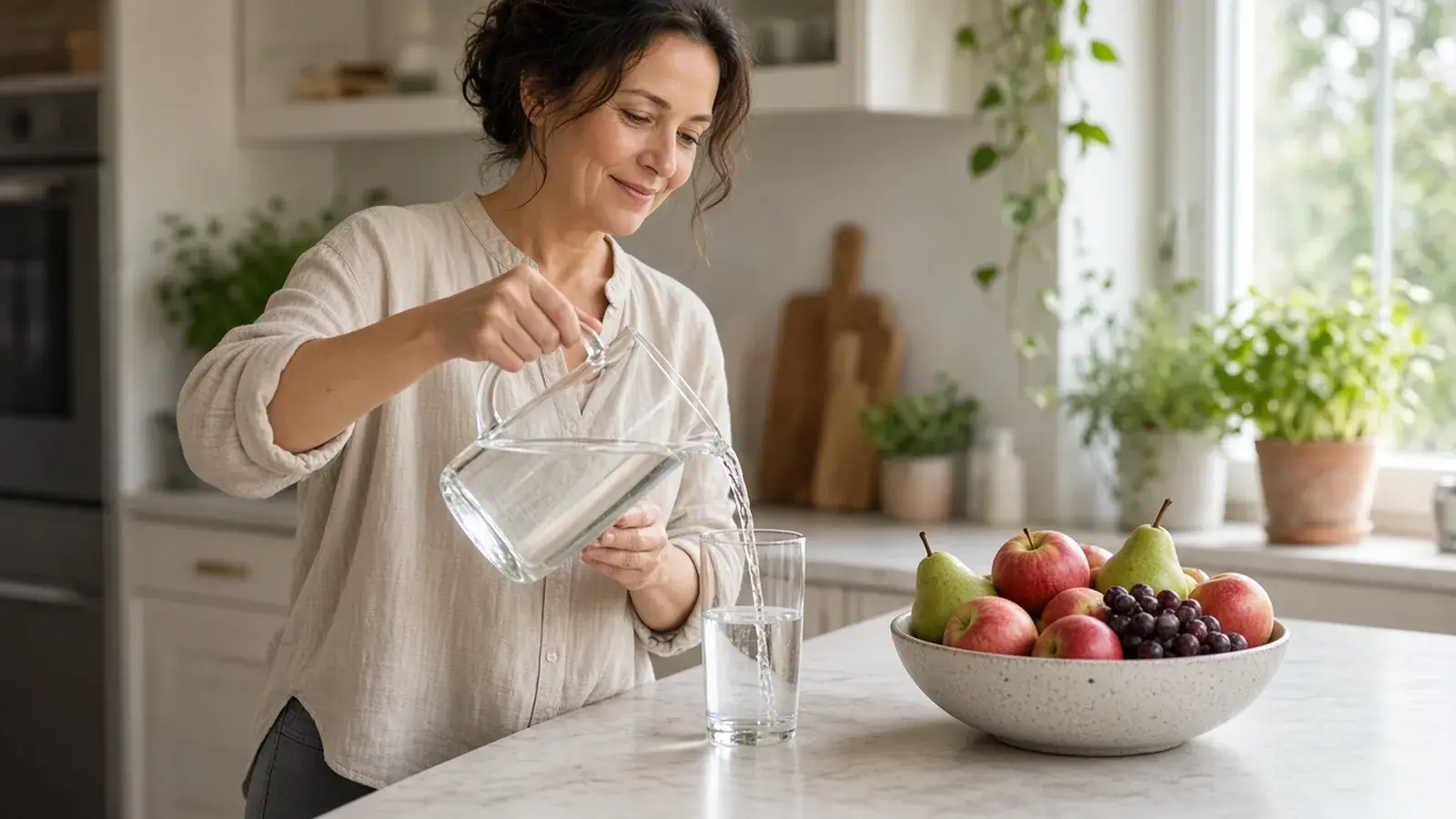
When your appetite shrinks on a GLP-1 medication, protein usually gets all the attention. Fiber and fluids are the quieter half of the story, and they are often the reason people feel bloated, backed up, headachy or wiped out in the first months of treatment.
This guide explains why fiber and hydration get harder on semaglutide, tirzepatide and similar drugs, how much to aim for, how to add fiber without making your stomach worse, and how to drink enough when you rarely feel thirsty. It draws on the 2025 joint nutrition advisory from four US obesity and nutrition societies, two 2026 expert reviews, the Wegovy prescribing information, National Academy of Medicine targets as summarized by Mayo Clinic, and a small but telling human study on GLP-1 drugs and drinking.
This is general education, not a personal nutrition or medical plan. If you have kidney disease, heart failure, a fluid restriction, inflammatory bowel disease, gastroparesis or a narrowed intestine, your fiber and fluid needs can be very different. Ask your clinician or a registered dietitian.
The short answer
You need roughly the same fiber and fluid on a GLP-1 as anyone else, but you have to work harder to get them. Eating less means less fiber and less of the water that normally comes from food, and research suggests these drugs may also nudge you to drink less. Aim for the standard fiber targets (21 to 38 grams a day depending on age and sex) by building up slowly, and drink on a schedule rather than waiting for thirst. Watch your urine color, and treat vomiting or diarrhea as a hydration problem that may need electrolytes and a call to your clinician.
Why fiber and fluids get harder on a GLP-1
GLP-1 medications work largely by making you feel full sooner and stay full longer. That is the point, but it has knock-on effects.
You eat less food, so you get less fiber. Fiber comes almost entirely from plant foods: fruit, vegetables, beans, whole grains, nuts and seeds. When portions shrink, fiber shrinks with them, and if the foods you still enjoy are mostly protein, it can fall further. In a 2025 cross-sectional study of 103 adults with type 2 diabetes in Italy, diets averaged about 11 grams of fiber per 1,000 calories, and none of the people taking a GLP-1 medication met fiber recommendations. People not taking one did not do much better, which is a reminder that low fiber is a general problem that a smaller appetite makes harder to fix.
You also lose water that normally comes from food. Mayo Clinic notes that food provides about 20% of the water you take in each day. A 2026 narrative review in Nutrition in Clinical Practice walks through the math: if food intake falls by about half on newer GLP-1 drugs, total water intake would drop by roughly 10% from food alone.
The drugs may reduce drinking directly. The same review points to evidence that GLP-1 receptor agonists can lower fluid intake independently of food. The clearest human data come from a small randomized crossover study of 20 healthy volunteers who took the GLP-1 drug dulaglutide or placebo for three weeks. During an eight-hour test day with identical meals, all but four participants drank less on dulaglutide. Median fluid intake was 1,300 ml versus 1,600 ml on placebo, a difference that fell just short of statistical significance, and 24-hour urine output was lower. Notably, participants did not report feeling less thirsty. The review’s author could not find any controlled trials measuring fluid intake on semaglutide or tirzepatide, so we do not know how large the effect is with today’s more potent drugs.
Slower digestion changes how your gut handles both. GLP-1 medications slow stomach emptying and gut movement. When stool moves more slowly, the colon has more time to pull water out of it. Less fiber plus less fluid plus slower transit is a recipe for constipation, which is one of the most common side effects. For the full picture on bowel changes, see our guide to constipation and diarrhea on GLP-1s.
The good news: the 2025 joint advisory and the 2026 expert review on GLP-1 digestive side effects both say fiber and hydration should be optimized early, and the review argues that starting proactively, before constipation sets in, is better than reacting once it has.
How much fiber to aim for
There is no separate fiber target for people on GLP-1 medications. Mayo Clinic summarizes the National Academy of Medicine’s daily recommendations for adults:
| Group | Daily fiber target |
|---|---|
| Women 50 or younger | 25 g |
| Women over 50 | 21 g |
| Men 50 or younger | 38 g |
| Men over 50 | 30 g |
These numbers can feel out of reach when you are eating a few small meals a day. Two practical ways to think about it:
- Spread it out. Registered dietitian Anna Risdorf, who says she uses a GLP-1 herself, suggests in a YouTube video on fiber swaps aiming for around 8 to 10 grams per meal and notes that most people get only about 10 grams a day in total. You do not need a big plate to get there; a few fiber-dense choices per meal add up.
- Move toward the target, not straight to it. If you currently eat very little fiber, the goal for the next few weeks is steady progress. Going from 10 grams to 35 grams overnight is how people end up gassy, bloated and more constipated, not less.
Soluble and insoluble fiber: which helps when
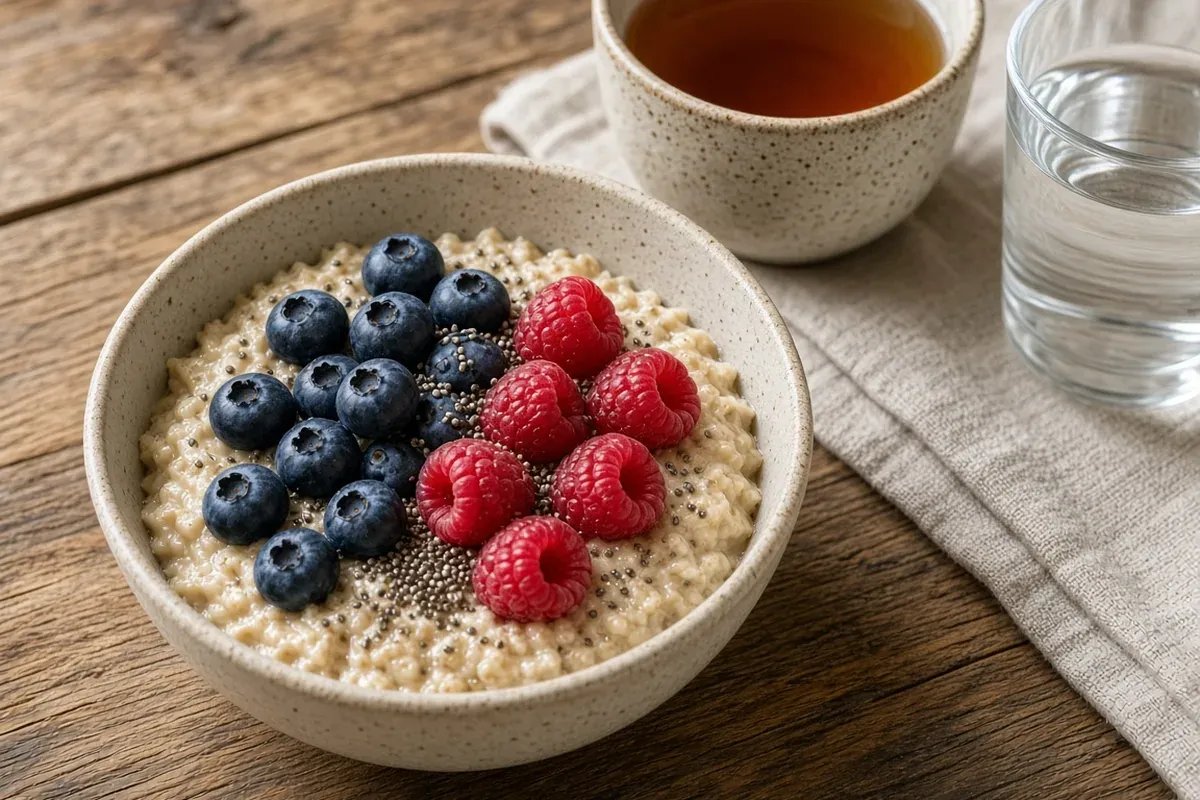
Most plant foods contain both types, but the balance matters on a GLP-1.
Soluble fiber dissolves in water and forms a gel. Mayo Clinic lists oats, peas, beans, apples, bananas, avocados, citrus fruits, carrots, barley and psyllium as sources. It slows digestion, can help lower cholesterol and blood sugar, and softens stool. It is usually the gentler place to start.
Insoluble fiber does not dissolve. It adds bulk and helps material move through the gut. Mayo Clinic’s examples include whole-wheat flour, wheat bran, nuts, beans and vegetables such as cauliflower, green beans and potatoes.
The 2026 expert review recommends gradually adding soluble fiber to help with stool softening and transit, and suggests avoiding insoluble fiber when someone also has bloating or nausea. The 2025 joint advisory adds that smaller, more frequent meals and avoiding fatty or high-fiber foods during the first few days of treatment can help ease early symptoms, followed by a gradual increase in foods with both types of fiber, such as prunes or other dried fruit.
| Food | Main fiber type | Why it works on a small appetite |
|---|---|---|
| Oatmeal or overnight oats | Soluble | Soft, easy to eat in a small portion, pairs with yogurt or milk for protein |
| Berries, apples, pears, bananas | Mostly soluble | Snack-sized, no cooking, adds water too |
| Beans, lentils, split peas | Both | Fiber plus protein in the same spoonful; works in soups |
| Cooked carrots, squash, peas | Mostly soluble | Gentler than raw salads when your stomach is touchy |
| Chia seeds, ground flaxseed | Both | A spoonful stirred into yogurt adds fiber without volume |
| Whole-grain bread, brown rice, quinoa | Mostly insoluble | Easy swaps for white versions once your stomach settles |
| Prunes and other dried fruit | Both | Specifically mentioned by the joint advisory for constipation |
| Nuts | Mostly insoluble | Small, dense snack; calorie-dense, so portions matter |
How to add fiber without making symptoms worse
Mayo Clinic’s advice applies doubly on a GLP-1: adding too much fiber too quickly can cause gas, bloating and cramping, so add it slowly over a few weeks to let your gut bacteria adjust, and drink plenty of water because fiber works best when it absorbs water.
A practical approach:
- Add one thing at a time. Pick one or two fiber upgrades per week, such as swapping white toast for whole-grain or adding berries to yogurt. In her video, Risdorf makes the same point: do not stack several high-fiber products in one day.
- Put a little fiber in every meal and snack. A small bowl of oats, a piece of fruit, a few spoonfuls of beans in soup. Consistency matters more than one big serving.
- Pair fiber with protein. Lentil soup, yogurt with chia and berries, eggs on whole-grain toast. You protect muscle and gut health in the same bite. Our article on how much protein you need on a GLP-1 covers the protein side.
- Go easy around dose increases. If you feel very full or queasy in the day or two after a dose or a dose step-up, lean on gentler, softer foods and build back up when it passes. Our guide to GLP-1 nausea has more on this.
- Drink with it. Fiber without enough fluid can make stool bulkier but not softer. Risdorf’s rule of thumb is roughly 8 ounces of water for every 5 or so grams of fiber; that is her practical suggestion, not an official guideline, but the principle that fiber needs fluid is well established.
What about fiber supplements?
Whole foods come first. Mayo Clinic notes that supplements do not provide the variety of fiber, vitamins and minerals that food does, and suggests checking with a healthcare professional before starting one. That said, the 2025 joint advisory lists fiber supplements as an option alongside food for GLP-1-related constipation, and the 2026 expert review describes slowly titrating psyllium husk, starting low and increasing as tolerated.
If you try one, start with a small serving, take it with a full glass of water, and increase slowly. Ask your pharmacist about timing if you take other oral medicines. The advisory also mentions polyethylene glycol 3350, an over-the-counter osmotic laxative, as an option when fiber and fluids are not enough; that is a conversation for your clinician or pharmacist.
How much fluid you need
The labels for GLP-1 medications do not set a water target. Mayo Clinic says the average healthy adult gets enough with about 11.5 cups (2.7 liters) to 15.5 cups (3.7 liters) of total fluid a day, which reflects National Academy of Medicine guidance for women and men respectively. That total counts everything: water, other drinks and food.
A 2023 analysis in the European Journal of Nutrition concluded that these total water intake guidelines are sufficient for optimal hydration in US adults. Before GLP-1 drugs were common, US adults were roughly in that ballpark: a national survey from 2009 to 2012 found men took in about 3.46 liters a day and women about 2.75 liters from all foods and drinks, with older adults drinking less than younger ones.
On a GLP-1, the food part of that total shrinks, and your drive to drink may too. That is why the 2026 expert review, when discussing constipation, recommends ensuring at least 1.5 to 2 liters of fluid a day. Think of that as a floor for drinks, not a ceiling.
| Fluid source | Counts toward hydration? | Notes for GLP-1 users |
|---|---|---|
| Plain water | Yes | Best everyday choice |
| Milk, kefir, drinkable yogurt | Yes | Adds protein; helpful when solid food is hard |
| Tea and coffee | Yes | Mayo Clinic says they count; caffeine may bother a sensitive stomach |
| Broth and soups | Yes | Adds sodium, which helps when you are losing fluid |
| Water-rich fruit and vegetables | Yes | Melon, strawberries, cabbage and squash are mostly water |
| Sports drinks and juice | Yes, but | Mayo Clinic warns about high sugar, salt and calories |
| Carbonated drinks | Yes, but | The 2026 review suggests avoiding fizzy drinks if you have fullness or indigestion |
| Alcohol | Not a good hydration choice | See our guide to alcohol and GLP-1s |
A simple hydration routine that does not rely on thirst
Because thirst may be a less reliable signal on a GLP-1, structure helps:
- Start the day with a glass. Before coffee, before anything else.
- Attach drinks to habits. Mayo Clinic suggests a drink of water with each meal and between meals. If drinking with meals makes you too full to eat, sip mostly between meals instead.
- Sip, do not chug. Large volumes at once can feel uncomfortable on a slow stomach. A bottle you refill a set number of times a day makes progress visible.
- Drink more when you sweat. Exercise, hot weather and altitude raise needs. If you are building activity, as in our guide to walking for weight loss, drink before, during and after.
- Check your urine. Mayo Clinic says colorless or light yellow urine and not often feeling thirsty suggest you are drinking enough. Dark urine and headaches suggest you are not.
More water is not always better. Mayo Clinic notes that drinking far too much can cause dangerously low sodium (hyponatremia), though this is rare in healthy adults.
When water is not enough: vomiting, diarrhea and electrolytes
Day-to-day, most people do not need special electrolyte products. The calculus changes when you are losing fluid fast. Mayo Clinic notes that vomiting, fever and diarrhea all increase fluid losses and that water, broth or oral rehydration solutions can help replace them.
This matters more on a GLP-1 than you might think. The Wegovy prescribing information includes a warning about acute kidney injury: there have been postmarketing reports of kidney injury and worsening chronic kidney failure, some needing dialysis, and most reported cases occurred in people who had nausea, vomiting or diarrhea leading to volume depletion. Some happened in people with no known kidney disease. The 2025 joint advisory adds that dehydration from severe nausea, vomiting or diarrhea can cause acute kidney injury and heart palpitations, and that people with or at risk of kidney problems should be counseled on preventing dehydration.
On X, electrolyte powders marketed specifically to GLP-1 users are everywhere. Some may be perfectly reasonable, but you do not need a branded “GLP-1” product. The 2026 review’s priority for diarrhea is simply maintaining hydration, and plain oral rehydration solutions or broth do the job for most people. Check sugar content on sports drinks and talk to your clinician before using electrolyte products if you have kidney or heart disease or take medicines that affect potassium or sodium.
When to dial fiber back
More fiber is not always the answer:
- During diarrhea. The 2026 expert review suggests a low-fat, lower-insoluble-fiber diet may reduce stool frequency while diarrhea lasts, with hydration as the priority. The joint advisory also notes that fiber capsules or powders can add bulk to loose stool, which is one reason to discuss options with your clinician rather than guessing.
- In the first few days of treatment or after a dose increase, if you feel very full or queasy.
- With certain conditions. Mayo Clinic lists situations where a clinician may advise less fiber, including gastroparesis (because high-fiber foods may worsen symptoms), narrowed intestines from Crohn’s disease, flares of inflammatory bowel disease or diverticulitis, after some gut surgeries, and before a colonoscopy.
If you have been told you have delayed stomach emptying, or you are scheduled for a procedure that needs sedation, follow your care team’s specific instructions on diet and fluids.
A sample day on a small appetite
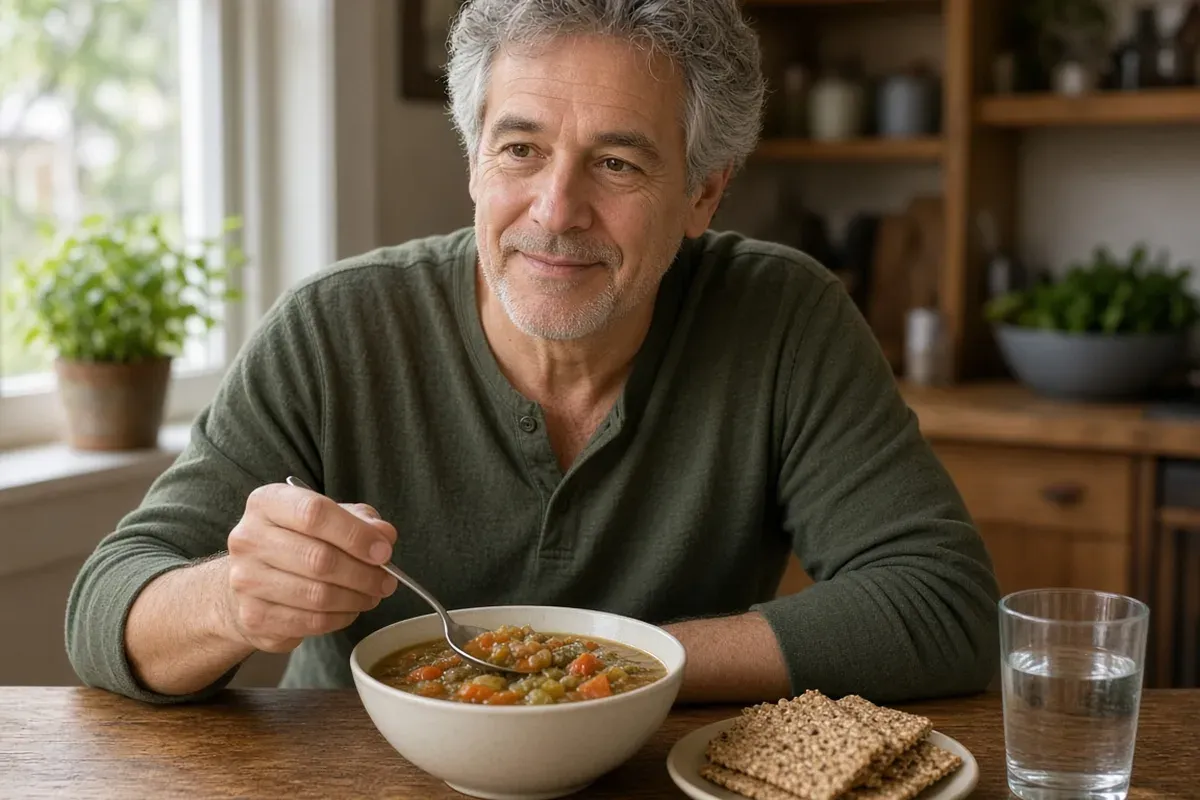
This is an illustration, not a meal plan. Portions are deliberately small.
| Time | Food or drink | Fiber and fluid angle |
|---|---|---|
| On waking | Glass of water | Starts the fluid count |
| Breakfast | Small bowl of oats with berries and a spoonful of chia; coffee or tea | Soluble fiber plus fluid |
| Mid-morning | Water; a pear or apple | Fruit fiber and water |
| Lunch | Half a bowl of lentil or bean soup; a few whole-grain crackers | Fiber, protein and broth together |
| Afternoon | Greek yogurt or kefir; water | Protein and fluid in one |
| Dinner | Salmon or tofu, small portion of brown rice or quinoa, cooked carrots or green beans | Mixed fiber with protein |
| Evening | Herbal tea or water | Keeps sipping going without a big volume before bed |
For more ideas built around small portions, see what to eat on a GLP-1 and our first 30 days guide.
What people are saying online
On X, fiber is having a moment. Some posts call fiber “nature’s Ozempic” or claim that protein and fiber mean you do not need a GLP-1 at all. There is a grain of science behind the slogan: the 2025 joint advisory notes that gut bacteria ferment fiber into compounds that prompt GLP-1 release, and small human studies of fiber supplements have found higher GLP-1 levels. But that natural effect is far smaller than a prescription medication, and it is not a replacement for treatment when one is medically indicated.
A more worrying strand of posts promotes fiber as a way to feel full while eating as little as possible. On a GLP-1, under-eating is already a risk, and the joint advisory emphasizes getting enough protein and nutrients, not eating less. Fiber should support a nourishing diet, not replace it.
The most practical posts echo the evidence: protein first, then fiber and fluids, small portions still count, and you do not need a cabinet full of supplements to do this well.
When to talk to your clinician
Contact your prescriber or care team if you:
- have not had a bowel movement for several days despite fiber and fluids, or constipation keeps coming back
- have vomiting or diarrhea that lasts more than a day or two, or you cannot keep fluids down
- notice signs of dehydration such as very dark urine, urinating much less than usual, dizziness or a racing heart
- have kidney disease, heart failure or a fluid restriction and are unsure how much to drink
- want to start a fiber supplement or laxative and take other medicines
Seek urgent care for severe or constant abdominal pain, a swollen hard belly, inability to pass gas or stool, blood in your stool, or confusion. These can signal serious problems that need prompt assessment. Our managing side effects guide and the Side Effects hub cover these warning signs in more detail.
The bottom line
Fiber and fluids are easy to overlook on a GLP-1 because appetite and thirst both quiet down. Eating less means less fiber and less water from food, and the drugs themselves may reduce drinking. Aim for the standard fiber targets of 21 to 38 grams a day, but get there slowly, starting with gentler soluble fiber and spreading it across small meals. Drink on a schedule rather than by thirst, with at least 1.5 to 2 liters of drinks a day as a practical floor for most people without a medical fluid restriction, and check your urine color. Treat vomiting and diarrhea seriously, because dehydration is the main driver of kidney injury reports on these medicines.
Keep exploring the Eating on GLP-1s hub for more on protein, what to eat and meal planning, or read how GLP-1s work for weight loss to understand why digestion slows in the first place.
Medical disclaimer: Weightomics publishes general health information for education only. It is not a substitute for professional medical advice, diagnosis or treatment. Never start, stop or change a medication, dose, diet or exercise program without talking to a licensed clinician.
Frequently asked questions
How much fiber should I eat on a GLP-1?
There is no special GLP-1 fiber target. Most guidance uses the National Academy of Medicine's general adult recommendations: 25 grams a day for women 50 or younger, 21 grams for women over 50, 38 grams for men 50 or younger and 30 grams for men over 50. On a much smaller appetite many people fall well short, so the practical goal is to move steadily toward those numbers, adding a little fiber at every meal or snack over several weeks.
How much water should I drink on Ozempic, Wegovy, Mounjaro or Zepbound?
The labels do not set a water target. The National Academy of Medicine's total water intake guidance is about 2.7 liters a day for women and 3.7 liters for men, counting all drinks and food. Because food normally provides about 20% of that and you are eating less, you usually need to drink a bit more deliberately. A 2026 expert review on GLP-1 digestive side effects recommends at least 1.5 to 2 liters of fluid a day when managing constipation. If you have heart failure, kidney disease or a fluid restriction, follow your clinician's target instead.
Do GLP-1 medications make you less thirsty?
They may. In a small randomized crossover study of 20 healthy volunteers, people drank less on the GLP-1 drug dulaglutide than on placebo despite eating identical meals, although participants did not report a difference in thirst. Animal studies point the same way. No controlled trial has measured fluid intake on semaglutide or tirzepatide, so the safest approach is to drink on a schedule rather than relying on thirst.
Should I take a fiber supplement on a GLP-1?
Food comes first because it brings vitamins, minerals and a mix of fiber types. A supplement such as psyllium can help if you cannot reach your target through food or you are prone to constipation, and the 2025 joint nutrition advisory lists fiber supplements as an option. Start low, increase slowly, take it with plenty of water, and check with your clinician or pharmacist first, especially if you take other oral medicines or have a digestive condition.
Can fiber make GLP-1 nausea or bloating worse?
It can if you add a lot at once. GLP-1 medications slow stomach emptying, and a sudden jump in fiber can cause gas, bloating and cramping. The 2025 joint advisory suggests avoiding fatty or high-fiber foods during the first few days of treatment, and a 2026 expert review suggests avoiding insoluble fiber such as bran when bloating or nausea is present. Gentle soluble fiber from oats, bananas or cooked carrots is usually easier, and you can build up once symptoms settle.
Do electrolyte drinks help on a GLP-1?
For everyday hydration, water, milk, tea and coffee all count toward your fluid intake. Electrolytes matter more when you are losing fluid through vomiting, diarrhea or heavy sweating. Mayo Clinic notes that water, broth or oral rehydration solutions can help replace fluids in those situations. Many sports drinks are high in sugar, so check the label. If you cannot keep fluids down, contact your clinician.
What are the signs of dehydration on a GLP-1?
Mayo Clinic lists dark urine and headaches as signs you may not be drinking enough, and dizziness or confusion as signs of more serious dehydration. The Wegovy label warns that acute kidney injury has been reported, mostly in people who became dehydrated from nausea, vomiting or diarrhea, so persistent vomiting or diarrhea, or being unable to keep fluids down, is a reason to call your clinician promptly.
Is it true that fiber is a natural GLP-1?
Only in a very limited sense. Some fibers are fermented by gut bacteria into compounds that prompt the gut to release a little GLP-1, and small studies of fiber supplements have shown higher GLP-1 levels in the blood. That effect is tiny compared with prescription GLP-1 medications. Fiber is valuable for fullness, regularity, blood sugar and heart health, but it is not a substitute for medical treatment.
Sources
- Mozaffarian D, et al. Nutritional priorities to support GLP-1 therapy for obesity: a joint advisory from the ACLM, ASN, OMA and TOS. Am J Clin Nutr. 2025
- Fujioka K. Effect of GLP-1 receptor agonist on nutrient intake: a narrative review. Nutr Clin Pract. 2026
- Singhani, et al. Gastrointestinal adverse effects of GLP-1 receptor agonists and dual GIP/GLP-1 receptor agonists: a narrative expert review. Nutr Clin Pract. 2026
- Winzeler B, et al. Effects of glucagon-like peptide-1 receptor agonists on fluid intake in healthy volunteers. Endocrine. 2020
- Ponzo V, et al. Exploring dietary intake in adults with type 2 diabetes using GLP-1 receptor agonists: a cross-sectional analysis. Nutrients. 2025
- Rosinger A, Herrick K. Daily water intake among U.S. men and women, 2009-2012. NCHS Data Brief No. 242. 2016
- Seal AD, et al. Total water intake guidelines are sufficient for optimal hydration in United States adults. Eur J Nutr. 2023
- Mayo Clinic. Dietary fiber: essential for a healthy diet (Dec 24, 2025)
- Mayo Clinic. Water: how much should you drink every day? (Jan 21, 2026)
- Wegovy (semaglutide) injection prescribing information, section 5.5 Acute Kidney Injury (via openFDA)
Keep reading in Eating on GLP-1s
- Alcohol and GLP-1 Medications: What to Know Before You DrinkWhat the FDA labels, NIH and major medical centers say about drinking alcohol while taking semaglutide, tirzepatide or another GLP-1: nausea, dehydration, low blood sugar, pancreatitis, calories, and the early research on GLP-1s and the urge to drink.
- What to Eat on a GLP-1A plain-English guide to eating on GLP-1 medications: which foods to prioritize, which to limit and why, how to build a small but complete plate, hydration and fiber timing, nutrients to watch and a sample day, based on the 2025 joint nutrition advisory and major medical centers.
- How Much Protein Do You Need on a GLP-1?How much protein to aim for on a GLP-1, according to the 2025 joint nutrition advisory: ranges, lean-mass methods, food ideas when appetite is low, and what to ask your clinician.
See the full Eating on GLP-1s hub →

Know someone who would enjoy this?