Part of: GLP-1 Weight Loss: The Complete Guide · Is a GLP-1 right for you?
GLP-1s for Women in Midlife: Weight Loss Around Perimenopause and Menopause
Do GLP-1 medicines like semaglutide and tirzepatide work for women in perimenopause and menopause? What the trials and menopause-specific studies show, how hormone therapy fits in, birth-control and pregnancy cautions, and how to protect muscle and bone.


If you are in your 40s or 50s and the scale has started creeping up even though your habits have barely changed, you are not imagining it. Midlife is when many women first look seriously at GLP-1 medicines such as semaglutide (Wegovy) and tirzepatide (Zepbound), and it is fair to ask whether the research that made these drugs famous actually applies to women going through perimenopause and menopause.
This guide walks through what the trials and menopause-specific studies show, what changes in your body during the menopause transition, and the practical issues that are unique to this stage of life: birth control, pregnancy plans, hormone therapy, muscle and bone. It is general education, not medical advice. Only a licensed clinician who knows your history can tell you whether a GLP-1 is right for you.
The short answer
GLP-1 weight-loss medicines appear to work about as well for women in perimenopause and after menopause as for younger women. The strongest data comes from a post hoc analysis of tirzepatide’s SURMOUNT trials. In SURMOUNT-1, women lost an average of:
- 26% of body weight before menopause (vs 2% on placebo),
- 23% in perimenopause (vs 3% on placebo),
- 23% after menopause (vs 3% on placebo).
Semaglutide’s menopause-specific evidence is smaller and mostly observational, but it points the same way.
What is different in midlife is not so much whether the medicine works, but what you need to plan around it:
- Menopause already pushes the body toward more belly fat and less lean mass, so protein, strength training and bone health deserve extra attention.
- During perimenopause, pregnancy is still possible, which matters for contraception and for stopping the medicine in time.
- Hormone therapy is a separate decision, made for menopause symptoms, not as a weight-loss add-on.
- A few midlife-specific questions, such as changes in menopause symptoms or bleeding after menopause, should always go to your clinician.
What happens to weight and body composition in midlife
Many women notice two things in their late 40s and 50s: the number on the scale drifts up, and weight seems to settle around the middle rather than the hips and thighs.
Mayo Clinic notes that weight gain often starts a few years before menopause, during perimenopause, and often continues at about 1.5 pounds (0.7 kg) a year through the 50s. Menopause is diagnosed after 12 months without a period, and in the United States the average age is 51. Mayo Clinic also points out that hormones are only part of the story: muscle naturally declines with age, activity levels often drop, sleep gets worse, and genetics play a role. It estimates that to keep the same weight, many women need about 200 fewer calories a day in their 50s than in their 30s and 40s.
The best long-term data comes from the Study of Women’s Health Across the Nation (SWAN), a large NIH-funded study that followed women through the transition with body scans. It found that:
- Weight climbed steadily through premenopause, with no sudden jump at the start of the menopause transition.
- But body composition changed: when the transition began, the rate of fat gain doubled and lean mass started to decline. These changes continued until about two years after the final period and then leveled off.
In other words, the scale may not tell the whole story. Two women can weigh the same before and after menopause while one has quietly traded muscle for fat.
That matters for bones too. A later SWAN analysis found that greater lean mass loss and greater fat gain during the transition were each linked to more fractures afterward. This is one reason menopause experts pay close attention to muscle and bone when any woman in this stage loses weight, with or without medicine.
For the basics of why weight changes are hard to reverse, see does weight loss slow your metabolism?.
Do GLP-1s work during perimenopause and menopause?
Tirzepatide: the clearest data
In 2025, researchers re-analyzed data from women in three tirzepatide trials (SURMOUNT-1, -3 and -4) and grouped them as pre-, peri- or postmenopausal. In SURMOUNT-1:
| Reproductive stage | Weight change on tirzepatide | Weight change on placebo | Waist change on tirzepatide |
|---|---|---|---|
| Premenopause | about −26% | about −2% | about −22 cm |
| Perimenopause | about −23% | about −3% | about −20 cm |
| Postmenopause | about −23% | about −3% | about −20 cm |
Across all three groups, 97% to 98% of women on tirzepatide lost at least 5% of their body weight, compared with 29% to 33% on placebo. Among women who started with a BMI under 35, 30% to 52% ended the study with a waist-to-height ratio in the “low central adiposity” range. The authors reported similar results in SURMOUNT-3 and -4.
Two caveats: this was a post hoc analysis (the trials were not designed to compare menopause stages), and several authors were Eli Lilly employees. Still, it is the largest menopause-stage breakdown available for any weight-loss medicine.
For trial details, see our tirzepatide clinical trial results and what tirzepatide is.
Semaglutide: real-world and review data
There is less menopause-specific data for semaglutide. A 2026 position statement from the Spanish Menopause Society concluded that semaglutide currently has the most direct menopause-specific evidence among these medicines, but that this evidence is “limited and largely observational.” A 2026 review from Mayo Clinic researchers reached a similar overall view: post hoc analyses of the pivotal trials suggest that weight-loss efficacy is preserved across reproductive stages, with postmenopausal women seeing reductions in weight, waist size and cardiometabolic risk factors comparable to premenopausal women.
For semaglutide’s main trials, see semaglutide clinical trial results and what semaglutide is.
What this means for you
The research does not suggest that menopause makes GLP-1s stop working. It also does not promise any particular result. In trials, individual results varied widely, and real-world results are often smaller than trial averages. Our GLP-1 weight-loss timeline explains what the studies show month by month.
Hormone therapy and GLP-1s: what we know
You may have seen headlines saying that hormone therapy “boosts” GLP-1 weight loss. Here is what is behind them.
A 2024 Mayo Clinic study looked back at the records of 106 postmenopausal women treated with semaglutide for at least three months. The 16 women using menopause hormone therapy lost more weight than the 90 who were not:
| Time on semaglutide | With hormone therapy | Without hormone therapy |
|---|---|---|
| 3 months | about 7% | about 5% |
| 6 months | about 13% | about 9% |
| 12 months | about 16% | about 12% |
The difference held after the researchers adjusted for other factors, and both groups saw improvements in blood sugar, blood pressure or cholesterol markers. But the study was small, retrospective and not randomized, and the authors themselves called for larger studies.
Expert groups are cautious about reading too much into it:
- The Spanish Menopause Society (2026) describes the link as hypothesis-generating and says it should not justify starting hormone therapy solely to increase weight loss.
- Mayo Clinic explains that hormone therapy is used for hot flashes and some bladder and sexual symptoms and may help prevent osteoporosis. It may help shift where fat is stored and may help indirectly by improving sleep, but it has not been shown to cause weight loss on its own.
The takeaway: if you are already using hormone therapy or are considering it for menopause symptoms, tell the clinician who is prescribing your GLP-1, and vice versa. The two decisions should be coordinated, but each one should stand on its own reasons.
A note on oral estrogen
GLP-1 medicines slow how quickly the stomach empties, especially after the first doses and dose increases. A 2025 case report in Menopause described a 51-year-old woman on oral estrogen whose hot flashes and mood worsened while her semaglutide dose was being raised; the symptoms settled when the dose increases were slowed. The author suggested that slower stomach emptying might temporarily affect how oral estrogen is absorbed. A single case proves nothing, but it is a reasonable thing to mention to your clinician if your menopause symptoms change when you start or increase a GLP-1.
Perimenopause: contraception and pregnancy plans
This is the part of midlife GLP-1 care that is easiest to overlook. During perimenopause, periods can be irregular or skipped, but ovulation can still happen, so pregnancy remains possible until menopause is confirmed. The prescribing information for these medicines has specific cautions:
- Pregnancy: Both the Wegovy and Zepbound labels say the medicine may cause fetal harm and should be stopped when a pregnancy is recognized. They explain that weight loss offers no benefit during pregnancy.
- Planning a pregnancy: The Wegovy label says to stop at least 2 months before a planned pregnancy, because semaglutide stays in the body for a long time.
- Birth control pills and tirzepatide: The Zepbound label says tirzepatide may reduce the effectiveness of oral hormonal contraceptives because it delays stomach emptying. It advises switching to a non-oral method or adding a barrier method for 4 weeks after starting and for 4 weeks after each dose increase. Non-oral hormonal contraceptives (such as an IUD, implant, patch or ring) should not be affected.
- Breastfeeding: The labels note limited human data, so this should be discussed individually.
If you could still become pregnant, bring your current contraception and any pregnancy plans to your first appointment. Our guide to who should not take a GLP-1 covers the other label cautions.
Protecting muscle and bone while you lose weight
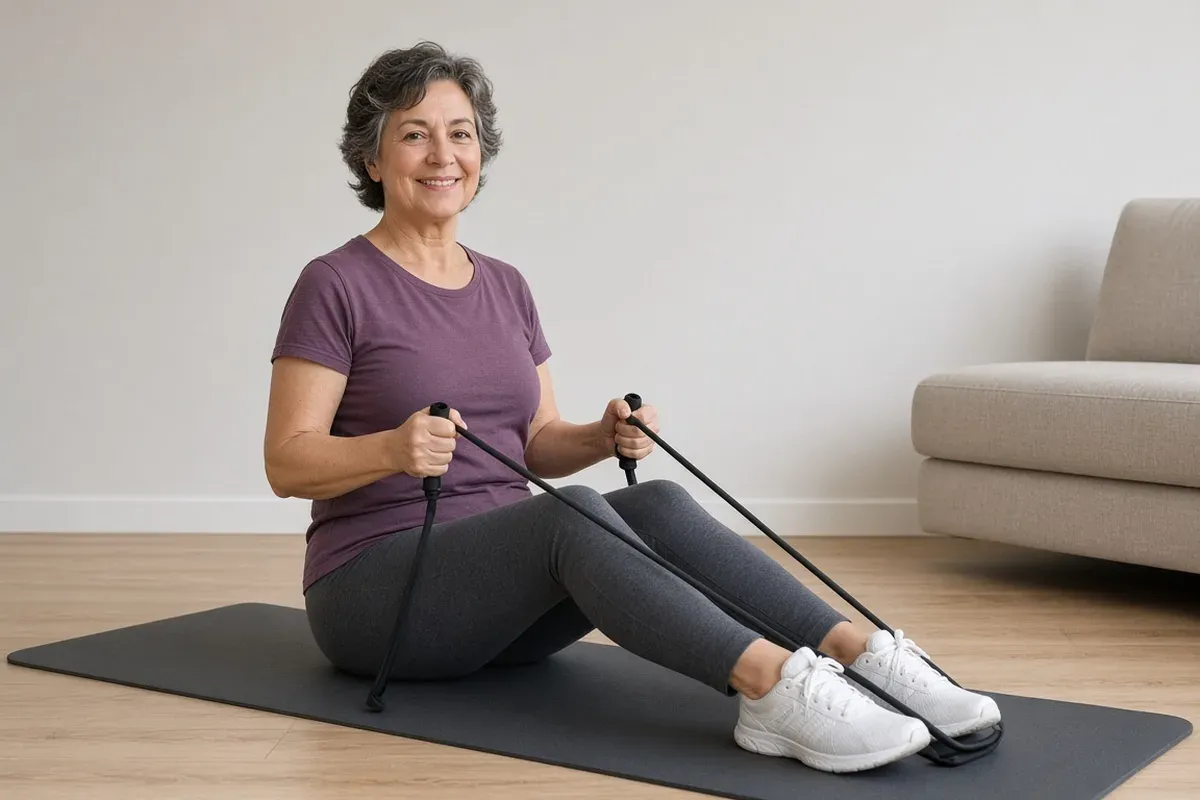
When people lose weight by any method, part of what they lose is lean mass, which includes muscle, water and other non-fat tissue. Because menopause is already a time of accelerated lean mass loss, this is a real concern for midlife women on GLP-1s.
What the 2026 reviews say:
- Lean mass losses are generally proportional to how much weight is lost, and are often accompanied by improved physical function as reported by patients (Mayo Clinic review).
- Lean mass is not the same as muscle strength. Few trials have measured strength or physical performance directly, so we know less than we would like (Mayo Clinic review; Pereira et al.).
- Findings on bone density and fracture risk are inconsistent across studies so far (Mayo Clinic review).
- Getting enough protein and micronutrients and doing resistance exercise may help preserve muscle and bone, though evidence specifically in women taking semaglutide after menopause is still indirect (Pereira et al.).
The Spanish Menopause Society recommends treating GLP-1 therapy in menopause within a broader plan that looks at belly fat, muscle health, fracture risk, heart health, hormone therapy decisions, resistance exercise and protein intake.
In practical terms, that usually means:
- Strength training at least twice a week. Mayo Clinic notes that strength training also helps maintain bone density, which falls with menopause. See strength training on GLP-1s for a beginner-friendly approach.
- Protein at every meal, which gets harder when appetite drops. See how much protein you need on a GLP-1 and what to eat on GLP-1s.
- Regular movement. Mayo Clinic cites 150 to 300 minutes a week of moderate activity such as brisk walking. Our walking for weight loss guide shows how to build up.
- A conversation about bone health, especially if you have a family history of osteoporosis or a prior fracture. Your clinician can decide whether any testing makes sense.
- A pace your body tolerates. Faster is not always better. See how fast you can safely lose weight.
Side effects and symptoms to flag in midlife
The common side effects of GLP-1s in women at midlife are the same as at any age: mostly digestive, such as nausea, constipation or diarrhea, and usually worst while the dose is being raised. Our guides to GLP-1 nausea, constipation and diarrhea and fiber and hydration cover these in detail.
A few situations are worth flagging specifically:
- Any bleeding after menopause. Bleeding after menopause always needs medical evaluation, whatever medicines you take. A 2026 case report described postmenopausal bleeding that began after a woman started semaglutide and resolved after she stopped; doctors first ruled out cancer and other causes. It is a single case and does not show that GLP-1s commonly cause bleeding, but it is a reminder not to assume a new symptom is “just the medicine.”
- Changes in hot flashes, sleep or mood when you start or increase a dose, especially if you take oral estrogen (see the case report above).
- Gallbladder symptoms such as pain in the upper right belly, fever or yellowing of the skin. Rapid weight loss can raise gallstone risk; see GLP-1s and gallbladder problems.
- Facial or skin changes. A 2026 review of research on so-called “Ozempic face” found that facial volume loss tracks with how much weight is lost and resembles changes after other kinds of major weight loss; how menopause and hormone therapy affect it is still uncertain.
For how the approved options compare on safety, see which GLP-1 is the safest?.
Special situations
Breast cancer survivors on hormone-blocking therapy. A 2026 study of 269 women taking GLP-1 medicines alongside endocrine therapy after breast cancer found an average one-year weight loss of about 4.5%, well below what trials report. Semaglutide (about 5.8%) and tirzepatide (about 4.7%) did better than an older diabetes-only GLP-1. Reviews say early data has not shown a higher recurrence risk, but prospective studies are still needed. These decisions belong with your oncology team.
Type 2 diabetes or prediabetes. Midlife is when blood sugar problems often appear. If you have either, your clinician may weigh the diabetes benefits of these medicines too. Our who qualifies for GLP-1 weight-loss treatment guide explains the BMI and health criteria.
Sleep apnea. Sleep problems are common around menopause. Zepbound is FDA-approved for moderate to severe obstructive sleep apnea in adults with obesity; see FDA-approved GLP-1s for weight loss.
Questions to bring to your clinician

Whether you see someone in person or by telehealth, these questions can help:
- Given my age, symptoms and history, which approved GLP-1, if any, makes sense for me?
- Could I still become pregnant, and what contraception should I use with this medicine?
- I take (or am considering) hormone therapy. Does anything need to change?
- Should my bone health be checked before or during treatment?
- How much protein should I aim for, and what kind of strength training is safe for me?
- How will we raise the dose, and what symptoms should make me call you?
- What is the plan if I stop, and how do we keep the weight off? (See maintaining weight loss.)
- Is this an FDA-approved product filled by a licensed pharmacy? (See red flags of online GLP-1 sellers.)
For more on eligibility and getting started, see how to get a GLP-1 prescription and our GLP-1 Guide hub.
The bottom line
GLP-1 weight-loss medicines do not appear to lose their effect at menopause. In the largest analysis by reproductive stage, women on tirzepatide lost a similar share of their weight before, during and after the menopause transition, and the smaller body of semaglutide evidence points the same way.
What midlife changes is the plan around the medicine. Menopause already shifts the body toward more belly fat and less lean mass, so protein, strength training and bone health matter more. Women who can still get pregnant need reliable contraception and a plan for stopping in time. Hormone therapy may be helpful for menopause symptoms and should be coordinated with GLP-1 treatment, but it is not a proven weight-loss tool on its own. With a licensed clinician who knows your history, these medicines can be considered alongside the everyday habits that protect your health for decades to come.
Explore more in our GLP-1 Guide hub, starting with what a GLP-1 medication is and how GLP-1s work for weight loss.
Medical disclaimer: This article is for general education and is not medical advice. It does not recommend any specific medicine, hormone therapy or dose. Talk with a licensed clinician before starting, stopping or changing any medicine, and follow the prescribing information for your product.
Frequently asked questions
Do GLP-1s work for women after menopause?
The available evidence says yes. In a post hoc analysis of SURMOUNT-1, postmenopausal women on tirzepatide lost an average of 23% of body weight versus 3% on placebo, similar to the 23% seen in perimenopause and 26% before menopause. A 2026 Mayo Clinic review concluded that post hoc analyses of pivotal trials suggest weight-loss efficacy is preserved across reproductive stages. Results vary from person to person, and these were analyses done after the trials, not trials designed to test menopause.
Do GLP-1s work during perimenopause?
In the SURMOUNT-1 post hoc analysis, women classified as perimenopausal lost about 23% of body weight with tirzepatide versus 3% with placebo, and 97% to 98% of women across all reproductive stages on tirzepatide lost at least 5%. Perimenopause has its own practical issues, though: irregular periods do not mean pregnancy is impossible, so contraception and pregnancy plans should be part of the conversation with your clinician.
Does hormone therapy make semaglutide work better?
One small Mayo Clinic study of 106 postmenopausal women found that the 16 women using menopause hormone therapy lost more weight on semaglutide at 12 months (about 16% vs 12%). It was retrospective and small, so it cannot prove cause and effect. The Spanish Menopause Society's 2026 position statement calls the link hypothesis-generating and says it should not justify starting hormone therapy only to increase weight loss.
Can GLP-1s affect birth control pills?
Tirzepatide can. The Zepbound label says it may reduce the effectiveness of oral hormonal contraceptives because it slows stomach emptying, and advises switching to a non-oral method or adding a barrier method for 4 weeks after starting and for 4 weeks after each dose increase. Non-oral hormonal contraceptives should not be affected. Ask your clinician how this applies to the specific medicine you are considering.
How long before trying to get pregnant should you stop a GLP-1?
The Wegovy label says to stop at least 2 months before a planned pregnancy because semaglutide stays in the body for a long time. Both the Wegovy and Zepbound labels say to stop when a pregnancy is recognized, because weight loss offers no benefit in pregnancy and may harm the fetus. Anyone in perimenopause who could still become pregnant should discuss timing with a clinician.
Will a GLP-1 make me lose muscle or bone during menopause?
Weight loss of any kind, including on GLP-1s, usually includes some lean mass, and menopause itself speeds up lean mass loss. A 2026 Mayo Clinic review found that lean mass losses on these medicines are generally proportional to the amount of weight lost, and that findings on bone density and fractures are inconsistent. Experts recommend enough protein, regular resistance exercise and attention to bone health, though direct evidence in women on GLP-1s is still limited.
Can GLP-1s make hot flashes worse?
This is not a recognized common side effect. One 2025 case report described a woman whose hot flashes and mood worsened during semaglutide dose increases while she took oral estrogen, and improved when the dose increases were slowed. The author proposed that slowed stomach emptying might briefly reduce absorption of oral estrogen, but a single case cannot establish that. Tell your clinician if menopause symptoms change when you start or increase a GLP-1.
Are GLP-1s safe for women with a history of breast cancer?
This is a question for your oncology team. Research is early: a 2026 study of 269 women on hormone-blocking breast cancer therapy found average weight loss of about 4.5% at one year on GLP-1 medicines, much less than in trials, and reviews call for prospective studies on long-term cancer outcomes. Decisions should be made with the clinicians who manage your cancer care.
Sources
- Tchang BG et al. Body weight reduction in women treated with tirzepatide by reproductive stage: a post hoc analysis from the SURMOUNT program. Obesity 2025;33(5):851-860
- Hurtado MD et al. Weight loss response to semaglutide in postmenopausal women with and without hormone therapy use. Menopause 2024;31(4):266-274
- Sánchez-Prieto M et al. Incretin-based therapies in peri- and postmenopausal women with obesity: an expert position statement from the Spanish Menopause Society. Maturitas 2026;213:109101
- Castaneda R et al. (Mayo Clinic). Incretin-based therapies in menopause: Current landscape. Maturitas 2026
- Greendale GA et al. Changes in body composition and weight during the menopause transition (SWAN). JCI Insight 2019;4(5):e124865
- Shieh A et al. Menopause-related changes in body composition are associated with subsequent bone mineral density and fractures (SWAN). J Bone Miner Res 2023;38(3):395-402
- Pereira NRM et al. Semaglutide in postmenopausal women: clinical implications for weight loss, muscle health, and sleep-disordered breathing. Maturitas 2026;214:109129
- Parker AE. Worsening vasomotor symptoms in the setting of estradiol and semaglutide: a case report. Menopause 2025;32(12):1168-1170
- Prasad S et al. Postmenopausal bleeding associated with semaglutide: a diagnostic challenge. JCEM Case Rep 2026
- Cronin KM, Tiersten A. GLP-1 receptor agonist-associated weight loss in breast cancer patients receiving concurrent endocrine therapy. Breast Cancer Res Treat 2026
- Zepbound (tirzepatide) prescribing information, via openFDA drug label API (contraception, pregnancy, lactation)
- Wegovy (semaglutide) prescribing information, via openFDA drug label API (pregnancy, reproductive potential)
- Mayo Clinic: The reality of menopause and weight gain (July 19, 2026)
Keep reading in GLP-1 Guide
- Which GLP-1 Is the Safest? How Approved Weight-Loss Medications Compare on SafetyIs there a safest GLP-1 for weight loss? How Wegovy, Zepbound, Saxenda, the Wegovy pill and Foundayo compare on label warnings, side effects, how often people stopped in trials, track record and heart data, and why the approved-vs-unapproved gap matters most.
- Who Should Not Take a GLP-1 Medication?A plain-English guide to who should not take GLP-1 weight-loss medicines such as semaglutide (Wegovy), tirzepatide (Zepbound) and orforglipron (Foundayo): the two official contraindications, pregnancy and breastfeeding, severe gastroparesis, past pancreatitis, diabetes medicines, eating disorders, surgery, and what changed on the labels in 2026.
- Who Qualifies for GLP-1 Weight-Loss Treatment?The FDA label criteria for Wegovy, Zepbound and other GLP-1 weight-management medicines explained: the BMI 30 and BMI 27 rules, which weight-related conditions count, who is usually not a candidate, how diabetes-only GLP-1s differ, and what to ask a clinician.
- GLP-1 Weight-Loss Timeline: What Studies Show Month by MonthHow fast do GLP-1 medications work? A month-by-month look at what clinical trials and real-world studies of semaglutide (Wegovy), tirzepatide (Zepbound) and GLP-1 pills show: the slow first weeks, the dose-escalation months, when weight loss usually levels off, why results vary, and when to talk to your prescriber.
See the full GLP-1 Guide hub →

Know someone who would enjoy this?